The oldest reliable route to an implant-based reconstruction is still one of the most used: place a tissue expander at the mastectomy, stretch the envelope gradually, then exchange the expander for the definitive implant at a second, smaller operation. This guide explains how two-stage reconstruction works, when teams choose it over direct-to-implant, what the expander phase is really like, and what happens at the exchange.


Why stage a reconstruction at all?
Because it buys safety and control. The expander goes in partially filled, placing minimal tension on mastectomy flaps whose blood supply has just been tested; volume is added only as the tissue proves it can carry it. Staging also buys time for decisions: pathology results, radiotherapy planning and the patient’s own preferences can all mature before the definitive implant is chosen. The cost is a second operation and a period of living with a temporary, deliberately firm device. The alternative single-stage route is covered in our direct-to-implant selection guide; the deciding variable between them is almost always flap quality on the day.
Stage one: placement
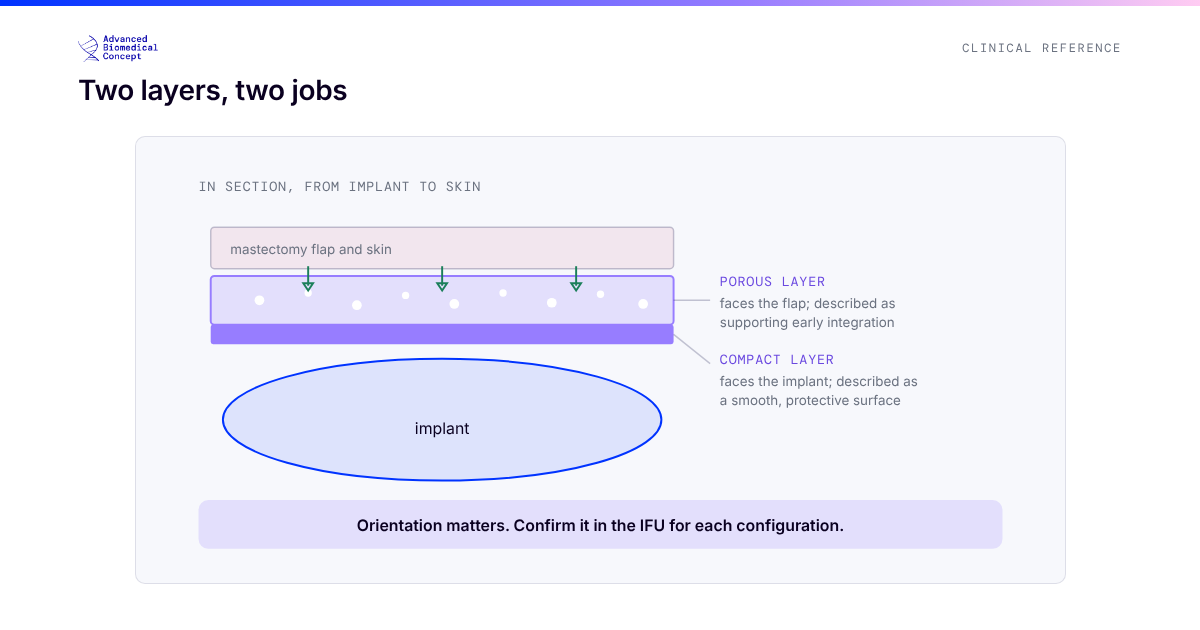
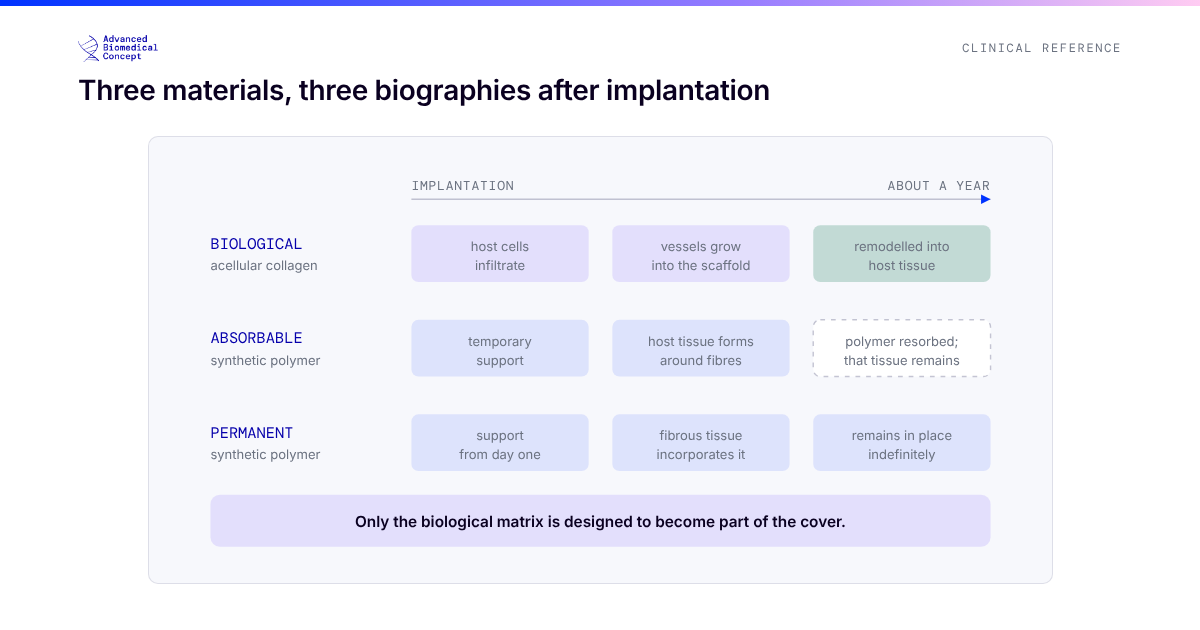
At the mastectomy, the expander is positioned in either the prepectoral or subpectoral plane, a choice with the same trade-offs discussed in our plane comparison, frequently stabilised with a biological matrix that defines the pocket and the inframammary fold from the start. Modern practice increasingly favours prepectoral expander placement in suitable patients, sparing the muscle for the whole journey.
The expansion phase
From a few weeks after surgery, saline is added through the expander’s integrated port in clinic visits, typically every one to three weeks, until the envelope slightly exceeds the planned implant volume. Patients describe a tightness for a day or two after each fill. Expansion usually completes within two to four months, though radiotherapy or healing issues can pause the schedule; where radiotherapy intervenes, the sequencing questions in our radiotherapy article come into play.
Stage two: the exchange
The exchange is a shorter operation through the existing scar: the expander comes out, the pocket is adjusted, capsulotomy or fold revision performed where needed, and the definitive implant placed. It is also the natural moment for refinement, contralateral symmetrisation and first-pass fat grafting of contour deficiencies. Interestingly, the literature does not mandate haste: Bernini and colleagues (Gland Surgery, 2016) discuss that the exchange can be timed flexibly around the patient’s oncological and personal circumstances, and some patients electively delay it. After radiotherapy, most units wait for acute skin changes to settle before exchanging.
What can go wrong
The expander phase has its own complication profile, reported consistently across large series: infection and exposure (the leading causes of expander loss), seroma (see our seroma article), deflation, malposition and, after radiotherapy, contracture of the expanded pocket. Failed expansion does not end reconstruction; it usually redirects it, toward autologous or hybrid solutions.
The bottom line
Two-stage reconstruction trades a longer journey for a wider safety margin: minimal demand on fresh mastectomy flaps, adjustable volume, and a built-in second operation where the result is tuned. It remains the default implant-based pathway when flap perfusion is uncertain, radiotherapy is likely, or decisions need time, and a well-run expansion ends in the same place as any other route: a stable, supported, refined reconstruction.
Key published sources
- Bernini M, et al. Two-stage implant-based breast reconstruction: should we always exchange the expander right away? Gland Surgery. 2016.
- Determining outcomes of PMRT delivered to the definitive implant in one- and two-stage reconstruction: systematic review and meta-analysis. JPRAS. 2017.
- Literature review and guide for optimal implant position in implant-based reconstruction. Archives of Plastic Surgery. 2023.
Important information This article is general education, not medical advice. Tap to read the full medical, regulatory & legal notice.
This article is provided by Advanced Biomedical Concept for general informational and educational purposes only. It does not constitute medical, surgical, diagnostic, or other professional healthcare advice, and it is not a substitute for consultation with a suitably qualified healthcare professional. Reading it creates no doctor–patient or other professional relationship. Nothing here should be used to diagnose, treat, cure, or prevent any disease or condition, or to make decisions about medical care. Always seek the advice of a physician or other qualified provider with any questions about a medical condition or treatment, and never disregard or delay professional advice because of something you have read here.
Any reference to Advanced Biomedical Concept products (including ExaShape and ExaFat) is provided for general information only. These are medical devices intended to be used by appropriately trained healthcare professionals strictly in accordance with their applicable, current Instructions for Use (IFU). Regulatory status (including CE marking and classification under the EU Medical Device Regulation), market availability, and approved indications differ between countries and may change over time; a device referred to here may not be available or approved in your country. This content is not intended as, and must not be relied upon as, a statement or claim of safety, clinical performance, or efficacy beyond what is set out in the applicable IFU and current regulatory approvals. Product-specific information is directed at healthcare professionals and is not intended to promote, advertise, or offer any medical device to the general public where such promotion is restricted or prohibited by law.
Statements reflect information believed to be accurate at the date of publication and may be updated or corrected without notice. Any statements regarding the future are expectations or general views, not guarantees. Clinical outcomes depend on many individual factors, results vary from person to person, and no particular result is promised or implied. Where third-party studies, sources, or external links are referenced, they are provided for convenience and information only and do not imply endorsement, and Advanced Biomedical Concept is not responsible for their content.
To the fullest extent permitted by applicable law, Advanced Biomedical Concept and its officers, employees, contributors, and representatives (each acting in that capacity and on behalf of Advanced Biomedical Concept) accept no liability for any loss, injury, or damage of any kind arising directly or indirectly from use of, or reliance on, this content. Nothing in this notice excludes or limits any liability that cannot lawfully be excluded or limited.
Questions about this material can be directed to us via our contact page.
Last reviewed: August 24, 2026.