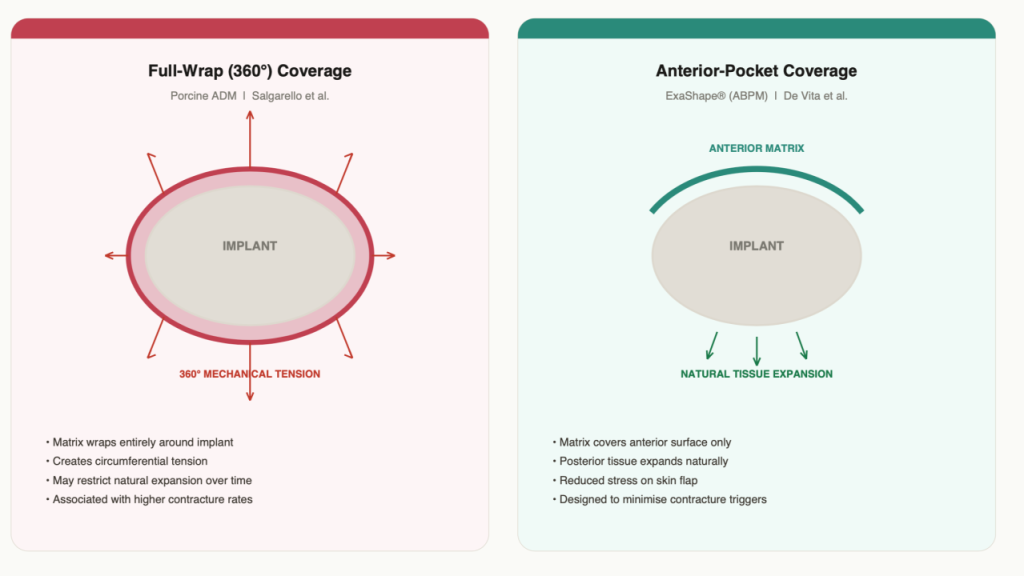
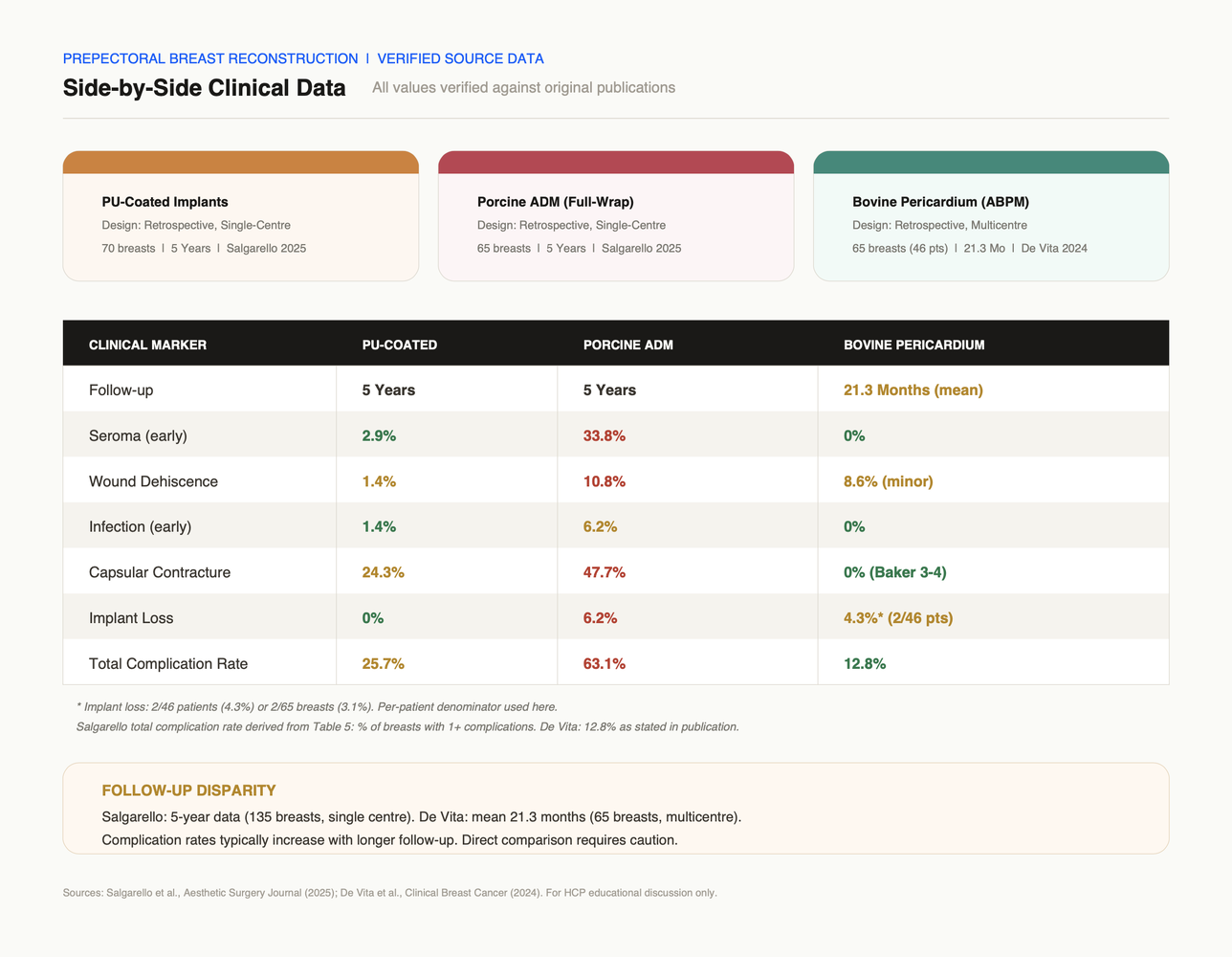
The evolution of prepectoral breast reconstruction has been driven by the search for techniques that provide both immediate aesthetic results and long-term stability. Recent clinical data, including the 5-year results from Salgarello et al. (2025) and multicentre observations from De Vita et al. (2024), offer a comprehensive look at how material choice and surgical design influence the reconstructive journey.
1. Identifying the Clinical Challenges (Salgarello et al. 2025)
The Salgarello study highlights critical long-term performance markers for Polyurethane (PU)-coated implants and porcine Acellular Dermal Matrix (ADM) full-wrap techniques:
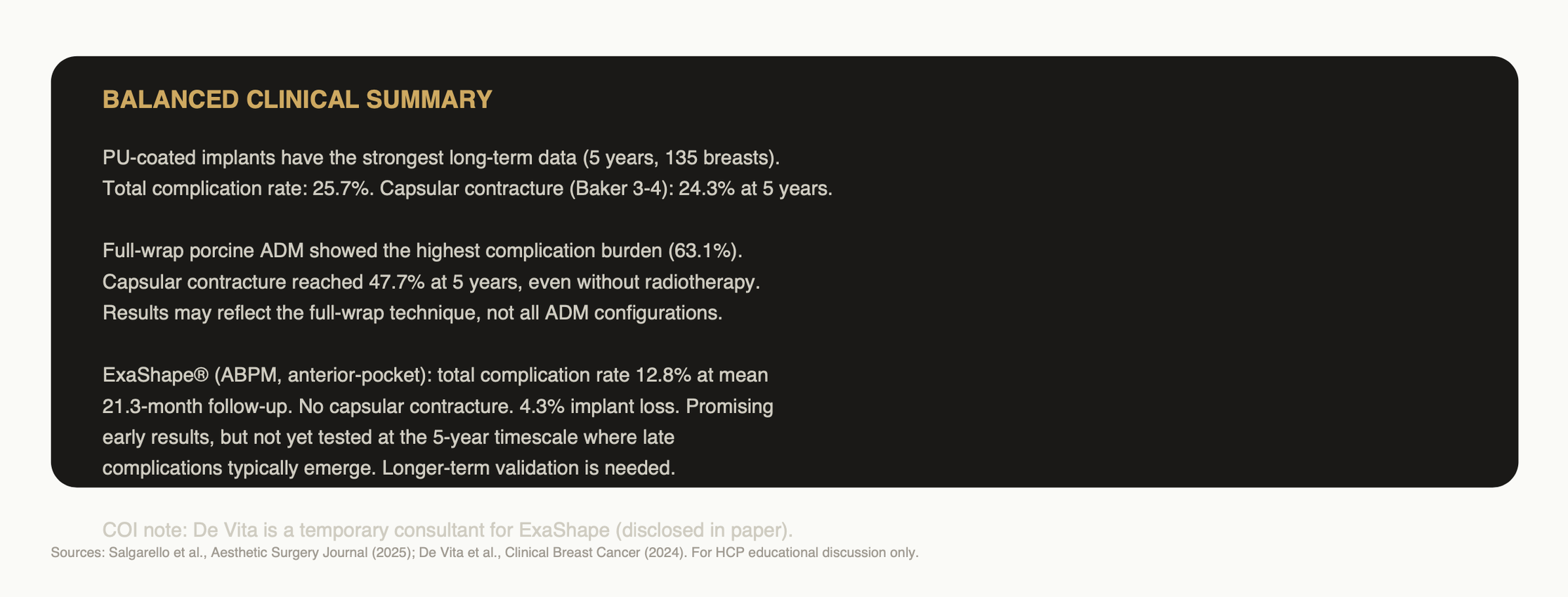
- Capsular Contracture: At 5 years, severe contracture (Baker 3-4) reached 47.7% in the porcine ADM group and 24.3% in the PU group.
- Surgical Burden: Total secondary procedure rates were significant (65.1% for ADM; 38.9% for PU), indicating a high long-term management requirement.
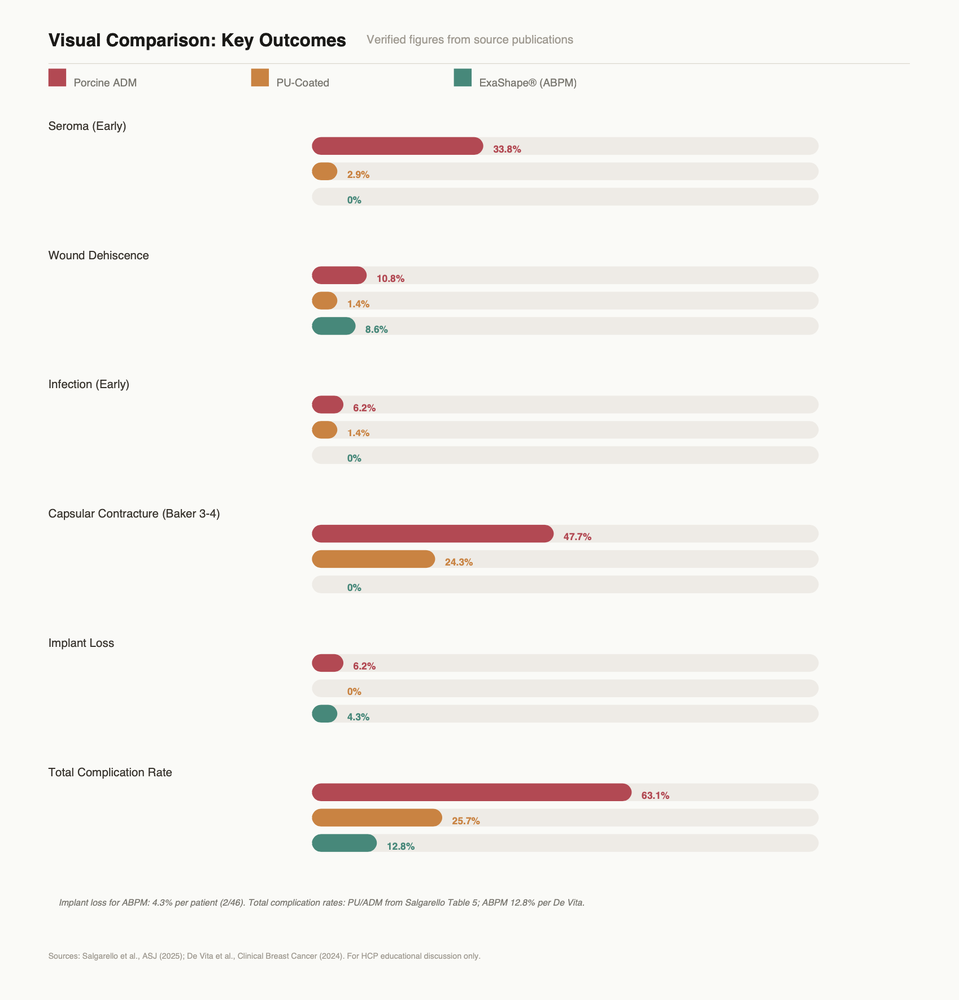
2. Contextualizing the Bovine Pericardium Profile (De Vita et al. 2024)
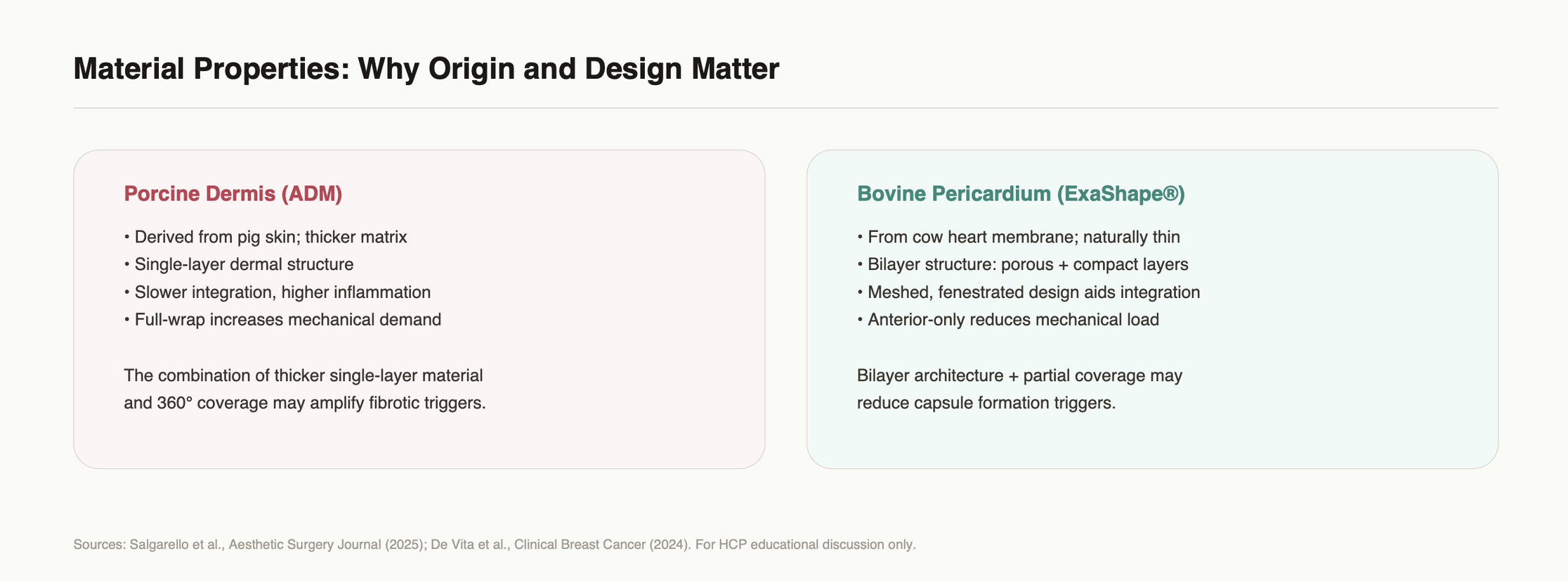
When viewed alongside these findings, the data for ExaShape® (Bovine Pericardium) suggests a different clinical trajectory. This is attributed to two primary factors:
- Material Origin: Bovine pericardium features a bi-layer, microporous structure that facilitates rapid, integrated neovascularization. This supports high-quality tissue remodeling without the excessive fibrotic response often associated with dermal-derived matrices.
- Mechanical Design: The anterior-pocket technique avoids the 360° restrictive wrap, reducing tension on the skin flap—a known trigger for capsule development.
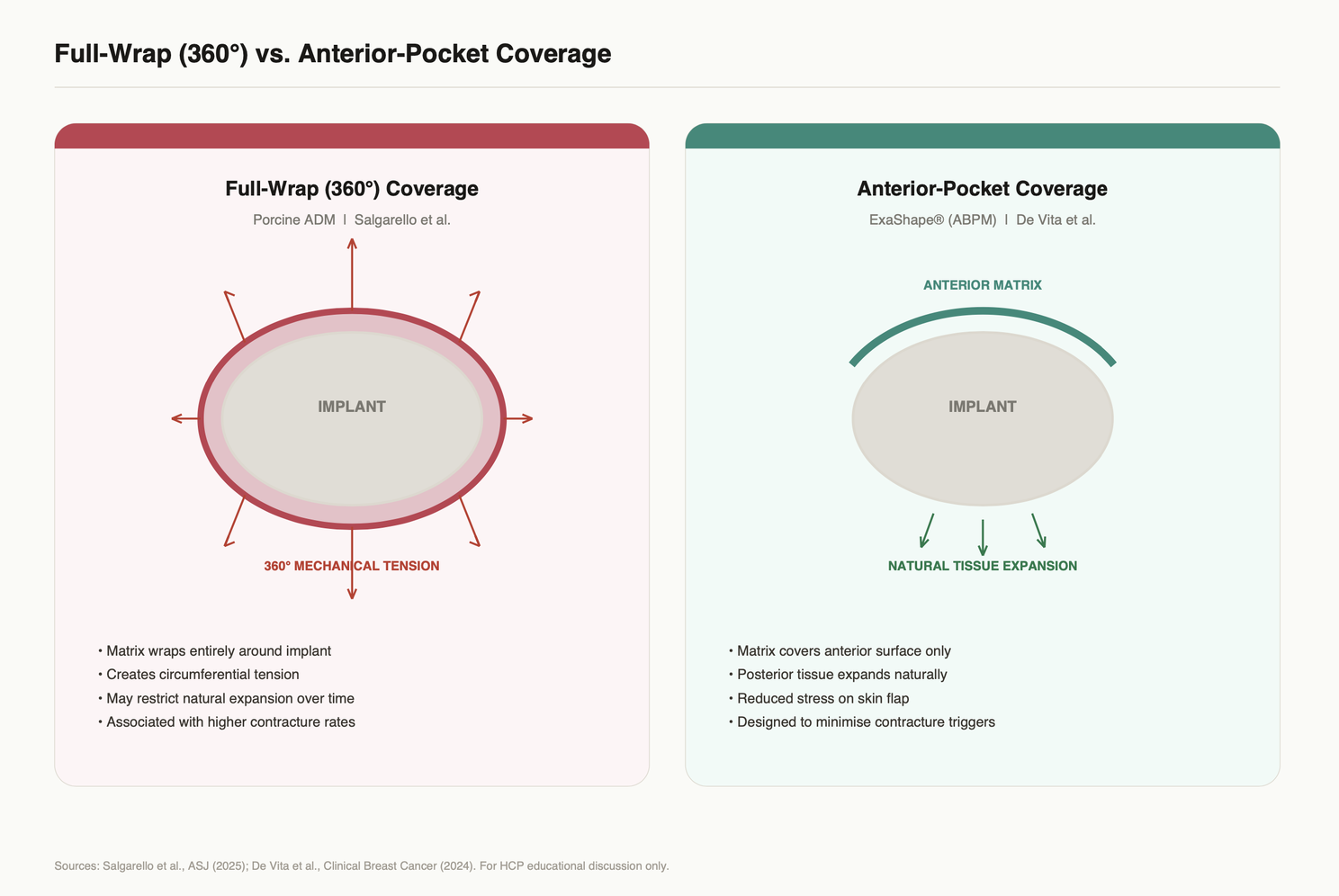
3. Side-by-Side Data Highlights
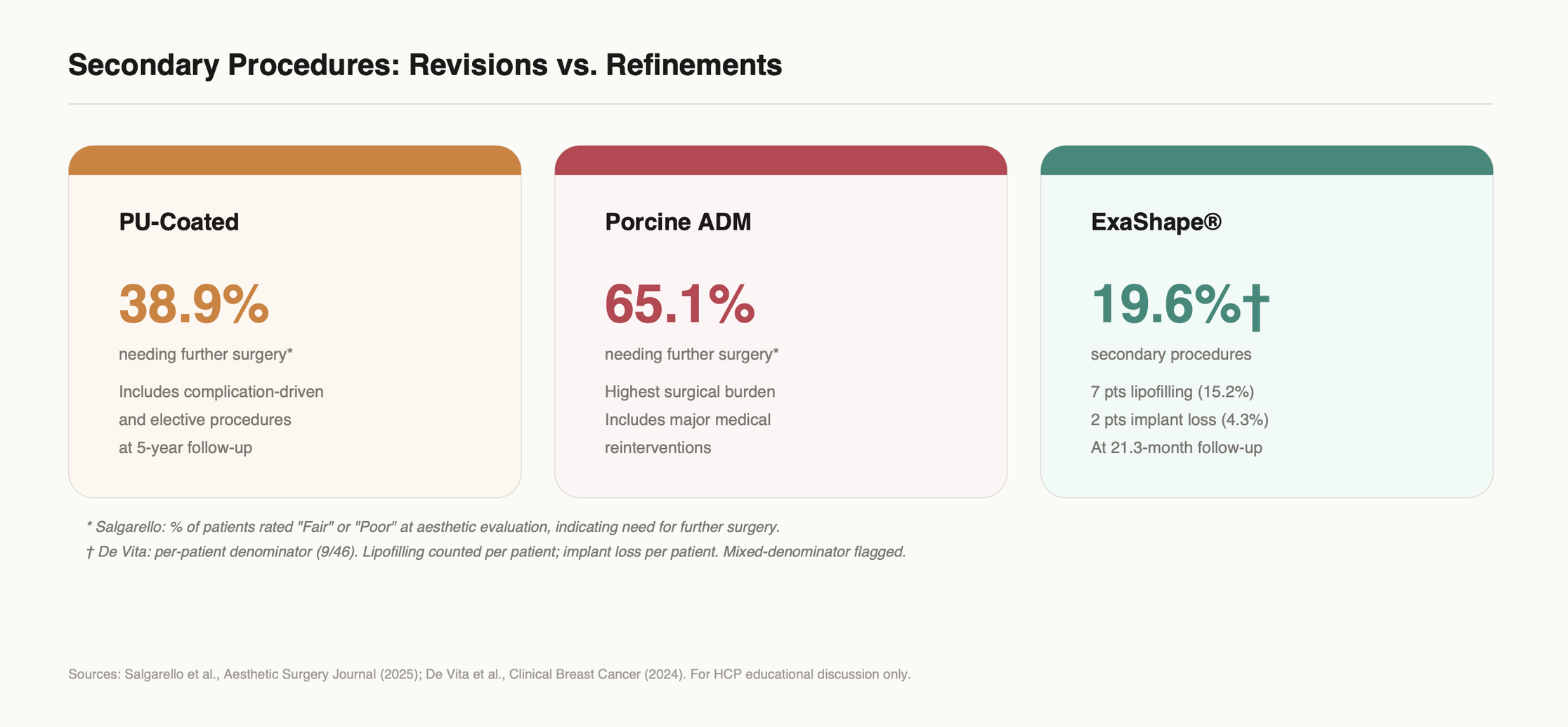
Conclusion and Clinical Insights
While the studies discussed evaluate different patient cohorts, materials, and follow-up periods, we believe it is essential to share these comparative insights. Understanding that outcomes in prepectoral reconstruction are highly dependent on the specific synergy of material and technique allows for more tailored clinical decisions.
Our objective is to highlight that the challenges observed with certain traditional models – specifically high rates of late-onset fibrosis and revision surgery- do not necessarily concern the bovine pericardium anterior-pocket approach. By utilizing a material designed for biological integration and a technique that respects tissue tension, clinicians can achieve a stable clinical course with a low incidence of late-onset complications, potentially reducing the long-term surgical burden for the patient.
References:
- Salgarello M, et al. Prepectoral Breast Reconstruction: ADM and Implants Vs Polyurethane-Coated Implants. Aesthetic Surgery Journal. 2025.
- De Vita R, et al. A Pericardium Bovine Matrix Pocket in DTI Prepectoral Breast Reconstruction. Clinical Breast Cancer. 2024.
Compliance Note: For Healthcare Professional (HCP) use only. This analysis is intended for scientific discussion. Surgical outcomes are subject to individual patient factors and technique.
Important information This article is general education, not medical advice. Tap to read the full medical, regulatory & legal notice.
This article is provided by Advanced Biomedical Concept for general informational and educational purposes only. It does not constitute medical, surgical, diagnostic, or other professional healthcare advice, and it is not a substitute for consultation with a suitably qualified healthcare professional. Reading it creates no doctor–patient or other professional relationship. Nothing here should be used to diagnose, treat, cure, or prevent any disease or condition, or to make decisions about medical care. Always seek the advice of a physician or other qualified provider with any questions about a medical condition or treatment, and never disregard or delay professional advice because of something you have read here.
Any reference to Advanced Biomedical Concept products (including ExaShape and ExaFat) is provided for general information only. These are medical devices intended to be used by appropriately trained healthcare professionals strictly in accordance with their applicable, current Instructions for Use (IFU). Regulatory status (including CE marking and classification under the EU Medical Device Regulation), market availability, and approved indications differ between countries and may change over time; a device referred to here may not be available or approved in your country. This content is not intended as, and must not be relied upon as, a statement or claim of safety, clinical performance, or efficacy beyond what is set out in the applicable IFU and current regulatory approvals. Product-specific information is directed at healthcare professionals and is not intended to promote, advertise, or offer any medical device to the general public where such promotion is restricted or prohibited by law.
Statements reflect information believed to be accurate at the date of publication and may be updated or corrected without notice. Any statements regarding the future are expectations or general views, not guarantees. Clinical outcomes depend on many individual factors, results vary from person to person, and no particular result is promised or implied. Where third-party studies, sources, or external links are referenced, they are provided for convenience and information only and do not imply endorsement, and Advanced Biomedical Concept is not responsible for their content.
To the fullest extent permitted by applicable law, Advanced Biomedical Concept and its officers, employees, contributors, and representatives (each acting in that capacity and on behalf of Advanced Biomedical Concept) accept no liability for any loss, injury, or damage of any kind arising directly or indirectly from use of, or reliance on, this content. Nothing in this notice excludes or limits any liability that cannot lawfully be excluded or limited.
Questions about this material can be directed to us via our contact page.
Last reviewed: June 16, 2026.