How to Compare Mesh Studies in Breast Reconstruction (and Why 9% and 38% Can Both Be Right)
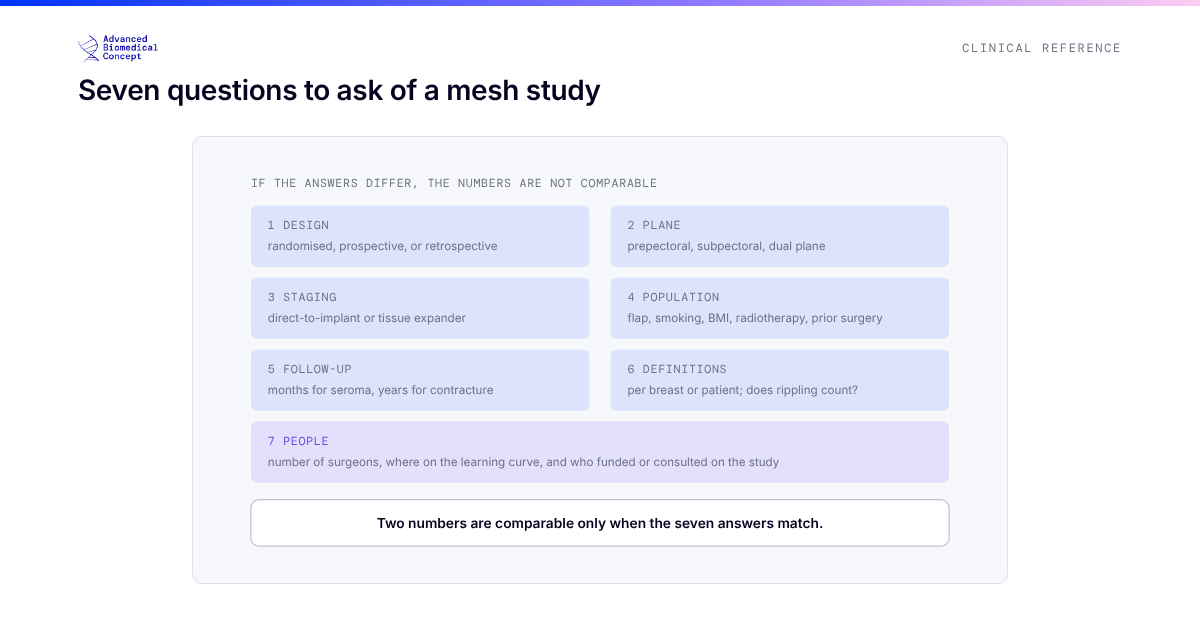
Headline complication rates for the same material range from under 10% to nearly 40%. Seven questions explain why, and show how to…
Read article →Headline complication rates for the same material range from under 10% to nearly 40%. Seven questions explain why, and show how to…
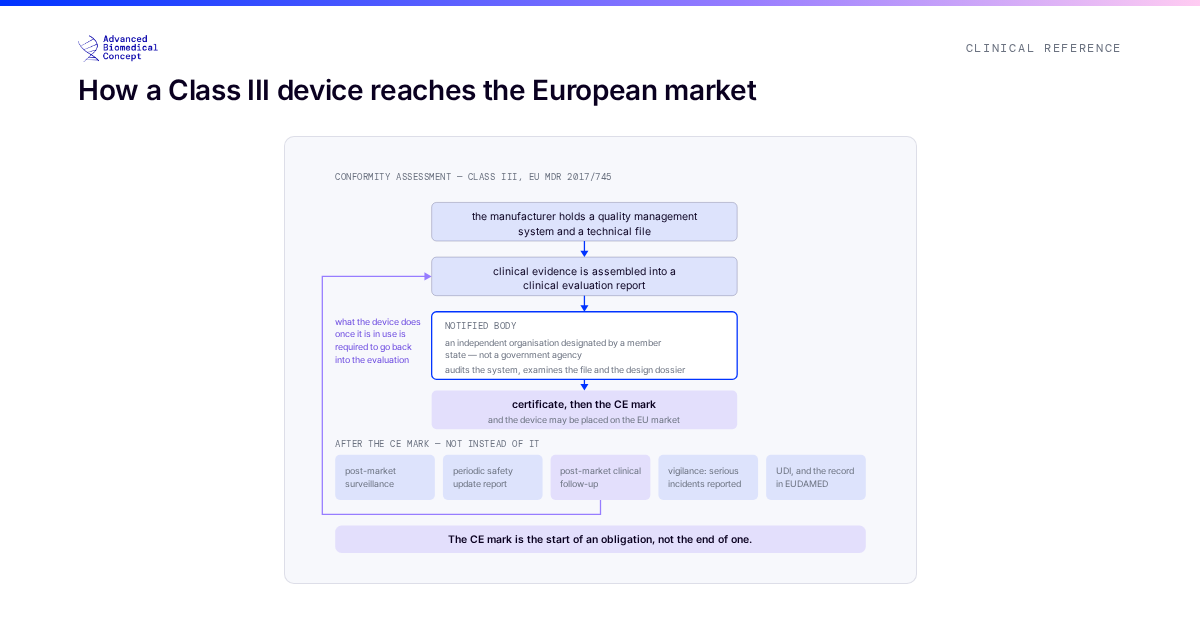
Read article →The CE mark answers whether a device meets the regulation for its intended purpose. It does not answer whether it is the…
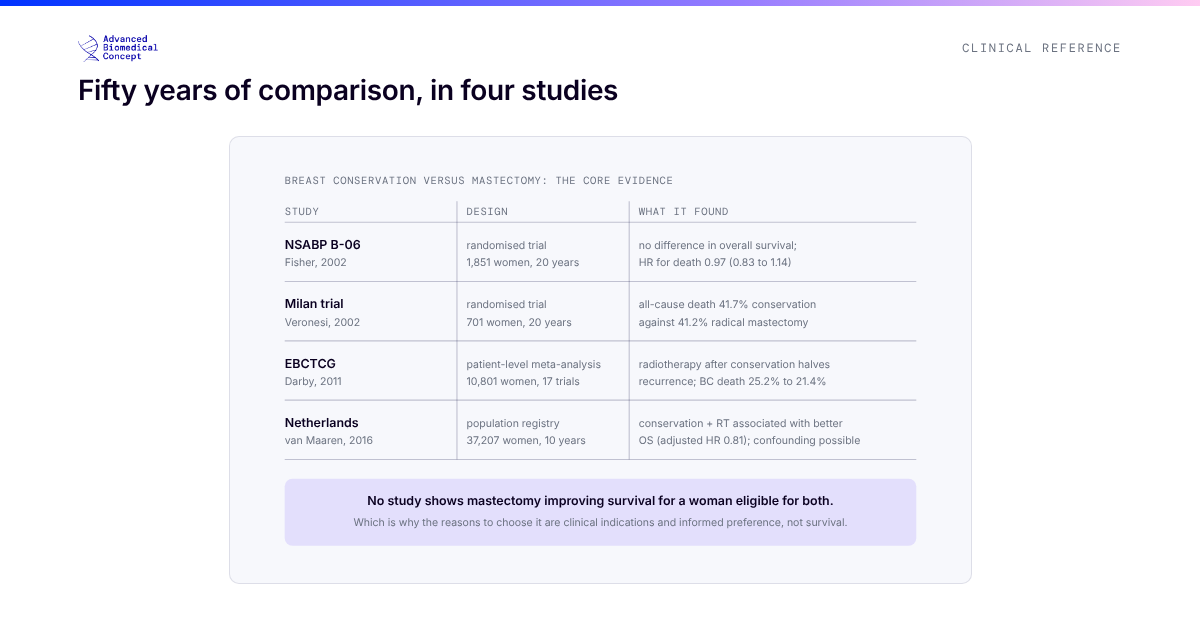
Read article →Fifty years of trials say conservation is at least as safe as mastectomy for eligible women. When mastectomy is the plan, the…
Read article →A 2026 multicenter cohort followed 501 immediate direct-to-implant reconstructions after nipple-sparing mastectomy for up to 10 years — comparing prepectoral placement with…
Read article →Which outcomes matter, the limits of the current literature, and a framework for critically appraising biological matrix evidence in implant-based reconstruction.
Read article →A thought leadership article for the plastic and reconstructive surgery community | Advanced Biomedical Concept | June 2026 Ask any experienced breast…
Read article →Follow a single ExaShape matrix from the moment it is placed to the moment it becomes patient-specific collagen. A biological matrix is…
Read article →The largest series to date on prepectoral reconstruction assisted by an acellular bovine pericardium pocket. Here is what it recorded. Material science…
Read article →One surface protects the implant. The other invites the body in. ExaShape does not ask you to choose. Ask a biological matrix…
Read article →Two biological matrices can look identical on the back table and behave nothing alike. The reason is written into the tissue they…
Read article →From the ExaShape® biological matrix for breast reconstruction to the EXAFAT® fat-grafting system — explore the full range of ABC devices.
Explore our productsSend us a message and our team will get back to you within 1–2 business days.