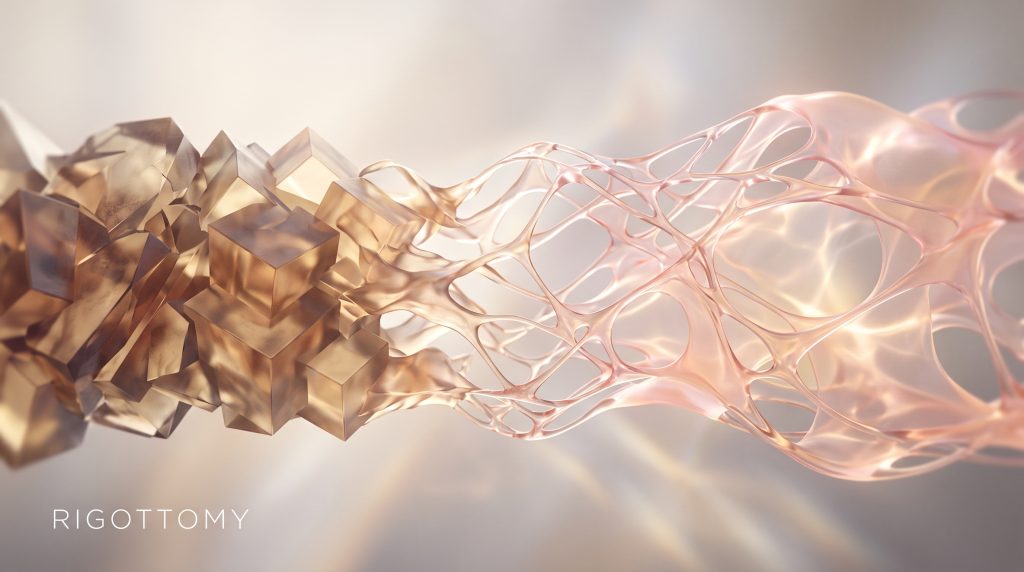
Rigottomia — known in English as rigottomy — is a minimally invasive surgical technique that prepares tight, fibrous or scarred tissue to receive a fat graft. Using a fine needle or blade passed through the skin, the surgeon makes many tiny releases inside the tissue, turning a stiff, restricted area into a soft, three-dimensional mesh that grafted fat can settle into and survive. It is one of the quiet enabling ideas behind modern fat grafting, and this guide explains what it is, how it works, and where it is used.
What does the word rigottomia mean?
The technique is named after the Italian plastic and reconstructive surgeon Gino Rigotti, who helped pioneer the use of the patient’s own fat to regenerate damaged tissue. “Rigottomia” is the Italian form of the word; “rigottomy” and the plural “rigottomies” are the terms most often used in English-language surgery. In the medical literature the same manoeuvre is also described as percutaneous fasciotomy or percutaneous aponeurotomy — “percutaneous” simply meaning “through the skin,” without an open incision.
The problem rigottomia solves
Fat grafting works by transferring small parcels of a patient’s own fat into an area that needs volume or softening. For that fat to survive, it needs two things from the tissue receiving it: space to sit in and a blood supply to feed it. Healthy, supple tissue provides both. But scarred, irradiated, burned or congenitally tight tissue does not — it is stiff, contracted and poorly vascularised. Injecting fat into such a bed under pressure tends to create large pools of fat that the body cannot nourish, and much of the graft is simply reabsorbed.
Rigottomia changes the recipient site itself, so the tissue is ready to accept and keep the graft — rather than forcing fat into a bed that cannot support it.
How rigottomia works, step by step
1. Releasing the tissue
The surgeon passes a fine needle or a small blade through tiny punctures in the skin and makes numerous small cuts through the fibrous bands and tight connective-tissue layers (the aponeurosis) that are restricting the area. Each release is deliberately small — on the order of a couple of millimetres — and there may be dozens of them.
2. Creating a three-dimensional mesh
Rather than one large cut, the many small releases expand the tissue into a lattice of micro-cavities. The scar or fibrous plate is effectively converted into a loose, open, three-dimensional matrix. Crucially, this is done without creating large empty pockets: wide subcutaneous cuts leave “macrocavities” where fat collects and dies, which is exactly what the technique avoids.
3. Seeding the mesh with fat
The many micro-openings are then seeded with small parcels of fat — microgrfating. Because the fat is distributed as tiny droplets through a released, better-vascularised bed, far more of each graft sits close to living, blood-supplied tissue, which is the single biggest factor in graft survival.
Rigottomia and structural fat grafting
Rigottomia is rarely a standalone operation; it is a preparation step that makes structural fat grafting more reliable. The two most influential ideas it is paired with are Sydney Coleman’s structural fat grafting (placing fat in fine, evenly distributed parcels) and Roger Khouri’s work on external tissue expansion and recipient-site conditioning. Rigotti and Khouri are usually credited together with turning percutaneous release into standard practice for “inhospitable” recipient tissue. The quality of the fat itself matters too: gentle harvesting and clean processing that preserve the regenerative stromal vascular fraction give the seeded graft the best chance to take.
Where rigottomia is used
- Scars and burns. Releasing contracted scar tissue and grafting fat into the resulting mesh can soften, expand and regenerate the area — a regenerative alternative to flap surgery in selected cases.
- Tuberous and constricted breasts. The fibrous ring that constricts a tuberous breast can be released with rigottomies and the lower pole expanded and volumised with fat. See our dedicated guide on rigottomia for tuberous breast and areola release.
- Breast reconstruction. After mastectomy or radiotherapy the chest wall is often tight and thin; rigottomia helps prepare it to accept fat as part of a wider reconstruction plan.
- Radiation-damaged and irradiated tissue. Fat grafting into released, irradiated skin is a well-known application of the regenerative principle behind the technique.
Why the technique matters
Rigottomia embodies a shift in reconstructive surgery: from moving large blocks of tissue to re-engineering the recipient site so the body can rebuild itself. By turning restrictive, poorly supplied tissue into a receptive, vascularised scaffold, it widens the range of problems that fat grafting can address — and it does so through a few millimetre-sized punctures rather than long incisions and visible scars.
The bottom line
Rigottomia (rigottomy) is the percutaneous release of tight or scarred tissue into a three-dimensional mesh that fat grafts can be seeded into and survive within. It is a preparation technique — the partner to good fat harvesting and structural grafting — and it underpins better outcomes in scars, burns, tuberous breasts and reconstruction. To understand the grafting side of the equation, read our guide to fat grafting and how fat processing affects graft survival.
This article is general educational information about a surgical technique and is not medical advice. Decisions about any procedure should be made with a qualified surgeon who can assess your individual situation.
Important information This article is general education, not medical advice. Tap to read the full medical, regulatory & legal notice.
This article is provided by Advanced Biomedical Concept for general informational and educational purposes only. It does not constitute medical, surgical, diagnostic, or other professional healthcare advice, and it is not a substitute for consultation with a suitably qualified healthcare professional. Reading it creates no doctor–patient or other professional relationship. Nothing here should be used to diagnose, treat, cure, or prevent any disease or condition, or to make decisions about medical care. Always seek the advice of a physician or other qualified provider with any questions about a medical condition or treatment, and never disregard or delay professional advice because of something you have read here.
Any reference to Advanced Biomedical Concept products (including ExaShape and ExaFat) is provided for general information only. These are medical devices intended to be used by appropriately trained healthcare professionals strictly in accordance with their applicable, current Instructions for Use (IFU). Regulatory status (including CE marking and classification under the EU Medical Device Regulation), market availability, and approved indications differ between countries and may change over time; a device referred to here may not be available or approved in your country. This content is not intended as, and must not be relied upon as, a statement or claim of safety, clinical performance, or efficacy beyond what is set out in the applicable IFU and current regulatory approvals. Product-specific information is directed at healthcare professionals and is not intended to promote, advertise, or offer any medical device to the general public where such promotion is restricted or prohibited by law.
Statements reflect information believed to be accurate at the date of publication and may be updated or corrected without notice. Any statements regarding the future are expectations or general views, not guarantees. Clinical outcomes depend on many individual factors, results vary from person to person, and no particular result is promised or implied. Where third-party studies, sources, or external links are referenced, they are provided for convenience and information only and do not imply endorsement, and Advanced Biomedical Concept is not responsible for their content.
To the fullest extent permitted by applicable law, Advanced Biomedical Concept and its officers, employees, contributors, and representatives (each acting in that capacity and on behalf of Advanced Biomedical Concept) accept no liability for any loss, injury, or damage of any kind arising directly or indirectly from use of, or reliance on, this content. Nothing in this notice excludes or limits any liability that cannot lawfully be excluded or limited.
Questions about this material can be directed to us via our contact page.
Last reviewed: July 28, 2026.