Of all the refinements in modern breast cancer surgery, none changes the reconstructed result more visibly than keeping the nipple. Nipple-sparing mastectomy (NSM) removes the breast gland while preserving the entire skin envelope including the nipple-areola complex, setting the stage for reconstructions that can look remarkably close to the original breast. This article covers who is a candidate, what the oncological evidence shows, and how NSM pairs with modern implant-based reconstruction.


What NSM actually preserves
In NSM the glandular tissue is removed through a discreet incision, commonly inframammary, while the whole skin envelope and nipple-areola complex remain. The tissue immediately behind the nipple is sampled and examined; if tumour is found there, the nipple is removed after all. What remains is a natural container waiting to be refilled, which is exactly what makes the operation both aesthetically powerful and technically demanding: the preserved envelope, especially the nipple, must survive on its skin blood supply alone.
Who is a candidate?
Selection criteria have widened as experience has grown, and published series converge on the same core requirements:
- Tumour factors. No clinical involvement of the nipple-areola complex, adequate tumour-to-nipple distance on imaging, and negative retroareolar sampling at operation. Recurrence data in appropriately selected patients show rates comparable to skin-sparing mastectomy in large series with long follow-up.
- Anatomical factors. Small to moderate breast size with limited ptosis favours nipple perfusion and a well-positioned result; large or very ptotic breasts raise necrosis risk and nipple malposition, though staged and oncoplastic strategies are extending eligibility in experienced units.
- Patient factors. Heavy smoking, prior breast irradiation and conditions compromising skin perfusion all raise the stakes for the envelope’s blood supply.
NSM is also the standard offering in risk-reducing mastectomy for high-risk carriers, where preserving body image over a long life matters greatly and no tumour constrains the anatomy.
The critical variable: flap and nipple perfusion
Everything in NSM downstream depends on the envelope surviving. Nipple necrosis, partial or complete, is the operation’s signature complication, and reported rates vary widely with technique, incision choice and selection. Incision placement matters, retracting rather than cutting the blood supply matters, and many units assess perfusion intraoperatively before committing to immediate reconstruction; our companion article on mastectomy flap assessment covers the tools and judgement involved.
Reconstruction after NSM
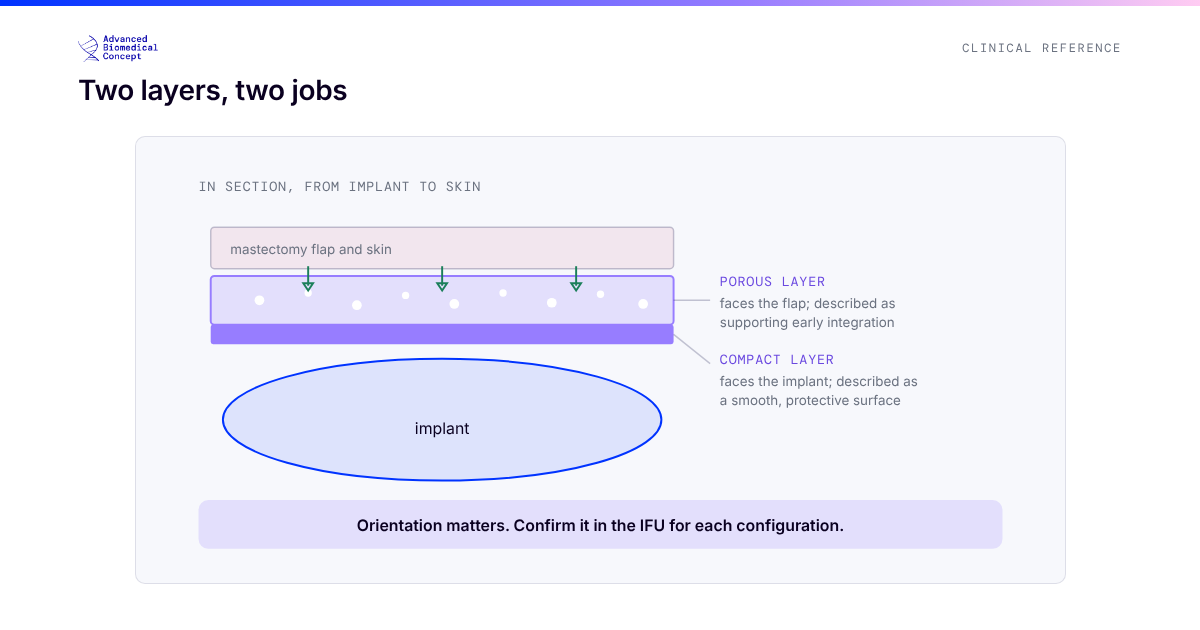
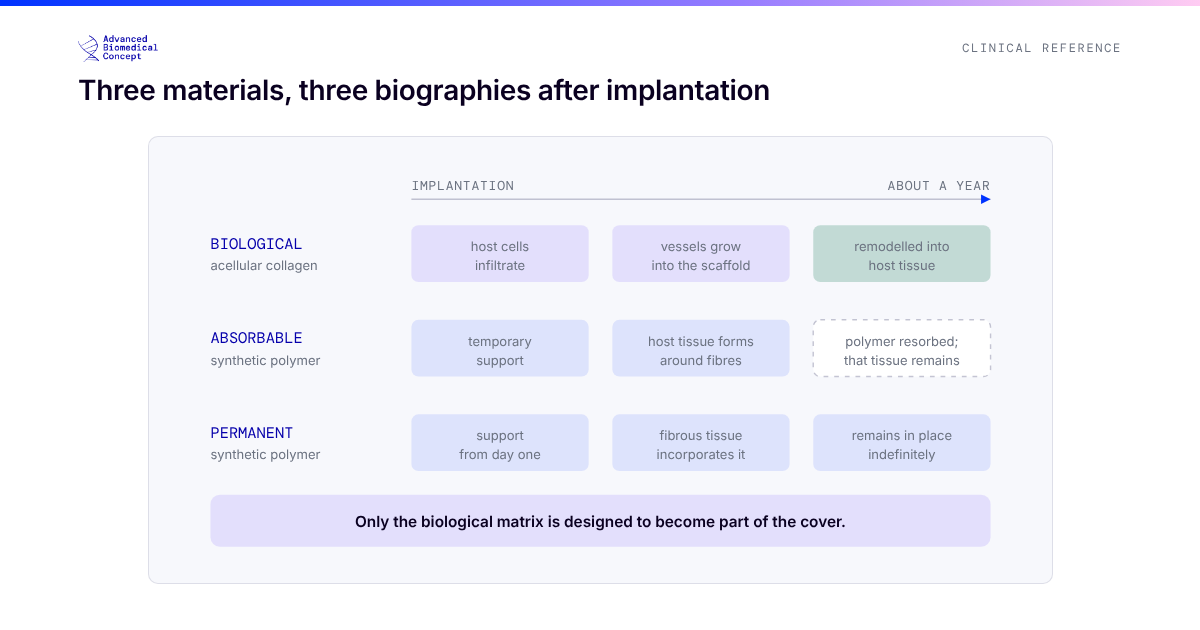
NSM pairs naturally with immediate implant-based reconstruction: the envelope is intact, the landmarks are preserved, and in suitable patients the implant can go in at the same operation, increasingly in the prepectoral plane supported by a biological matrix, either direct-to-implant where flaps are robust or via staged expansion where caution is wiser. Series of implant reconstruction in NSM (reviewed in Gland Surgery, 2019) report high satisfaction, with patient-reported outcome studies showing quality-of-life advantages when the nipple is preserved. Refinement with fat grafting completes many results.
The honest limitations
Patients deserve to know three things before choosing NSM. The preserved nipple usually has little or no sensation, though it retains its appearance and projection. Necrosis, when it happens, can mean losing the very structure the operation set out to keep. And the nipple must sit where the reconstruction puts it: in larger or ptotic breasts, achieving symmetric nipple position may require staging or contralateral surgery. None of these negates the operation’s value; all of them belong in the consent conversation, alongside the questions worth asking any reconstructive team.
The bottom line
Nipple-sparing mastectomy preserves the breast’s landmarks so reconstruction can restore rather than recreate, with oncological outcomes comparable to skin-sparing approaches in properly selected patients. Selection and perfusion are the whole game: the right tumour, the right anatomy, and an envelope that keeps its blood supply.
Key published sources
- Implant reconstruction in nipple sparing mastectomy. Gland Surgery. 2019.
- Clinical outcomes after nipple-sparing mastectomy and expander/implant reconstruction. World Journal of Surgical Oncology. 2021.
- Quality-of-life outcomes improve with nipple-sparing mastectomy and reconstruction. Journal of the American College of Surgeons. 2017.
- Comparison of nipple-sparing and skin-sparing mastectomy with immediate reconstruction on patient-reported outcomes. Scientific Reports. 2025.
Important information This article is general education, not medical advice. Tap to read the full medical, regulatory & legal notice.
This article is provided by Advanced Biomedical Concept for general informational and educational purposes only. It does not constitute medical, surgical, diagnostic, or other professional healthcare advice, and it is not a substitute for consultation with a suitably qualified healthcare professional. Reading it creates no doctor–patient or other professional relationship. Nothing here should be used to diagnose, treat, cure, or prevent any disease or condition, or to make decisions about medical care. Always seek the advice of a physician or other qualified provider with any questions about a medical condition or treatment, and never disregard or delay professional advice because of something you have read here.
Any reference to Advanced Biomedical Concept products (including ExaShape and ExaFat) is provided for general information only. These are medical devices intended to be used by appropriately trained healthcare professionals strictly in accordance with their applicable, current Instructions for Use (IFU). Regulatory status (including CE marking and classification under the EU Medical Device Regulation), market availability, and approved indications differ between countries and may change over time; a device referred to here may not be available or approved in your country. This content is not intended as, and must not be relied upon as, a statement or claim of safety, clinical performance, or efficacy beyond what is set out in the applicable IFU and current regulatory approvals. Product-specific information is directed at healthcare professionals and is not intended to promote, advertise, or offer any medical device to the general public where such promotion is restricted or prohibited by law.
Statements reflect information believed to be accurate at the date of publication and may be updated or corrected without notice. Any statements regarding the future are expectations or general views, not guarantees. Clinical outcomes depend on many individual factors, results vary from person to person, and no particular result is promised or implied. Where third-party studies, sources, or external links are referenced, they are provided for convenience and information only and do not imply endorsement, and Advanced Biomedical Concept is not responsible for their content.
To the fullest extent permitted by applicable law, Advanced Biomedical Concept and its officers, employees, contributors, and representatives (each acting in that capacity and on behalf of Advanced Biomedical Concept) accept no liability for any loss, injury, or damage of any kind arising directly or indirectly from use of, or reliance on, this content. Nothing in this notice excludes or limits any liability that cannot lawfully be excluded or limited.
Questions about this material can be directed to us via our contact page.
Last reviewed: August 24, 2026.