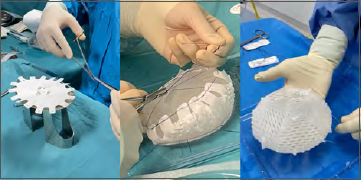
If a biological matrix is part of your breast reconstruction plan, it is natural to have questions about safety. This article answers the questions patients most commonly ask — in plain language, and without overstating what any material can promise. It is educational, not medical advice; your surgical team is always the right source for guidance on your individual situation.
What exactly is being implanted?
A biological matrix is a thin, sterile sheet of processed connective tissue. The living cells are removed, leaving behind the natural collagen scaffold — the same kind of protein framework that gives your own tissues their structure. Because the cells are removed (a process called decellularisation), the material is designed to be biologically “quiet,” so the body is far less likely to react to it as a foreign object and instead grows into it.
Is a biological matrix safe?
Biological matrices are regulated medical devices with years of use in reconstructive and general surgery. They are manufactured under strict controls and sterilised before use. That said, no implanted material is entirely risk-free, and safety is always relative to the individual. The honest answer is that biological matrices have a well-established track record, but every reconstruction carries risks that should be discussed and weighed for you specifically.
Will my body reject it?
Outright rejection in the way people imagine with organ transplants is not how these materials typically behave, precisely because the cellular material that triggers strong immune responses has been removed. The intended outcome is the opposite of rejection: the body recognises the collagen scaffold as something to build on, and populates it with its own cells and blood vessels. Complications can still occur, but a well-processed matrix is designed for integration, not isolation.
What are the possible risks?
As with any breast reconstruction, possible risks include infection, fluid collection (seroma), problems with wound healing, and the need for further surgery. These are risks of the overall procedure rather than the matrix alone, and their likelihood depends on many factors — your health, whether radiotherapy is involved, the surgical technique and more. Your surgeon can talk you through the specific risks that apply to you.
Is animal-derived material safe, and what about my beliefs?
Many biological matrices are derived from animal tissue such as bovine pericardium. These materials are processed and manufactured under rigorous safety standards designed to remove cells and reduce risk. If you have personal, cultural, religious or dietary considerations about animal-derived materials, raise them with your surgeon — it is a completely reasonable thing to discuss, and alternatives may be available.
How long does it last?
A biological matrix is not meant to last forever as a separate object — the intention is that it becomes incorporated into your own tissue over months as it is repopulated and remodelled. In that sense a well-integrated matrix does not “wear out”; it becomes part of the supported reconstruction.
What can I do to reduce my risks?
While many factors are outside your control, some things genuinely help. Being honest with your surgical team about your full medical history, any medications, and whether you smoke matters, because smoking in particular can impair wound healing. Following pre- and post-operative instructions carefully, attending follow-up appointments, and reporting anything that seems wrong early all support a smoother recovery. None of this eliminates risk, but it stacks the odds in your favour and is well worth doing.
Does the type of matrix matter?
Yes. Materials differ in strength, how well they integrate, and how consistently they are manufactured. A strong, well-integrating scaffold such as a bovine-pericardium matrix — for example Advanced Biomedical Concept’s ExaShape — is designed both to support the implant and to encourage the body’s own regeneration. This is one of the things worth asking your surgeon about.
Questions that can help you feel confident
If safety is on your mind, these questions can turn anxiety into a useful conversation with your surgeon: What material do you plan to use, and why that one for me? Is it designed to integrate with my tissue? What are the specific risks in my case, given my health and treatment? What signs should prompt me to call you after surgery? A good surgical team will welcome these questions — asking them is a sign of an engaged, informed patient, not a difficult one.
The bottom line
Biological matrices are established, regulated devices with a solid safety history, designed to integrate with your body rather than sit as a foreign object — but no material is risk-free, and safety is always individual. The best way to feel confident is to ask your surgeon what material they plan to use, why, and what the risks are for you. To understand the technology further, read our biological matrix guide or the overview of prepectoral reconstruction.
This is a sensitive medical topic. This article is general education, not medical advice — please discuss your individual situation with a qualified surgeon.
Important information This article is general education, not medical advice. Tap to read the full medical, regulatory & legal notice.
This article is provided by Advanced Biomedical Concept for general informational and educational purposes only. It does not constitute medical, surgical, diagnostic, or other professional healthcare advice, and it is not a substitute for consultation with a suitably qualified healthcare professional. Reading it creates no doctor–patient or other professional relationship. Nothing here should be used to diagnose, treat, cure, or prevent any disease or condition, or to make decisions about medical care. Always seek the advice of a physician or other qualified provider with any questions about a medical condition or treatment, and never disregard or delay professional advice because of something you have read here.
Any reference to Advanced Biomedical Concept products (including ExaShape and ExaFat) is provided for general information only. These are medical devices intended to be used by appropriately trained healthcare professionals strictly in accordance with their applicable, current Instructions for Use (IFU). Regulatory status (including CE marking and classification under the EU Medical Device Regulation), market availability, and approved indications differ between countries and may change over time; a device referred to here may not be available or approved in your country. This content is not intended as, and must not be relied upon as, a statement or claim of safety, clinical performance, or efficacy beyond what is set out in the applicable IFU and current regulatory approvals. Product-specific information is directed at healthcare professionals and is not intended to promote, advertise, or offer any medical device to the general public where such promotion is restricted or prohibited by law.
Statements reflect information believed to be accurate at the date of publication and may be updated or corrected without notice. Any statements regarding the future are expectations or general views, not guarantees. Clinical outcomes depend on many individual factors, results vary from person to person, and no particular result is promised or implied. Where third-party studies, sources, or external links are referenced, they are provided for convenience and information only and do not imply endorsement, and Advanced Biomedical Concept is not responsible for their content.
To the fullest extent permitted by applicable law, Advanced Biomedical Concept and its officers, employees, contributors, and representatives (each acting in that capacity and on behalf of Advanced Biomedical Concept) accept no liability for any loss, injury, or damage of any kind arising directly or indirectly from use of, or reliance on, this content. Nothing in this notice excludes or limits any liability that cannot lawfully be excluded or limited.
Questions about this material can be directed to us via our contact page.
Last reviewed: July 23, 2026.