If a surgeon has mentioned rigottomia (rigottomy) as part of a fat grafting plan, it is natural to want to know what it involves, whether it is safe and what recovery looks like. This guide answers the questions patients ask most often, in plain language. It is general information, not medical advice — your own surgical team is the right source for advice about your situation.
What actually happens during rigottomia?
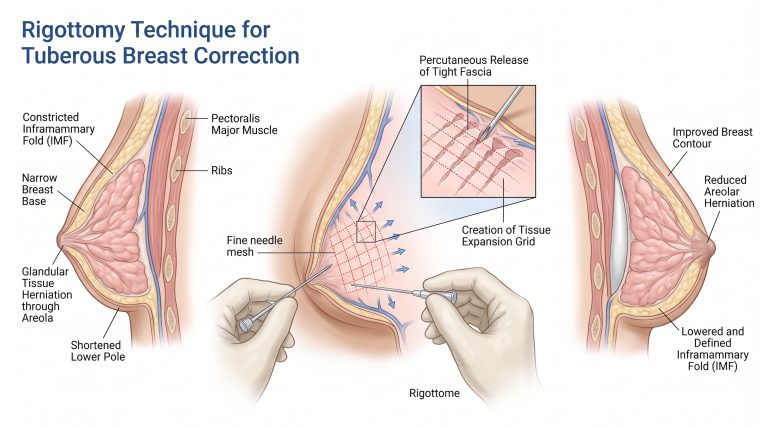
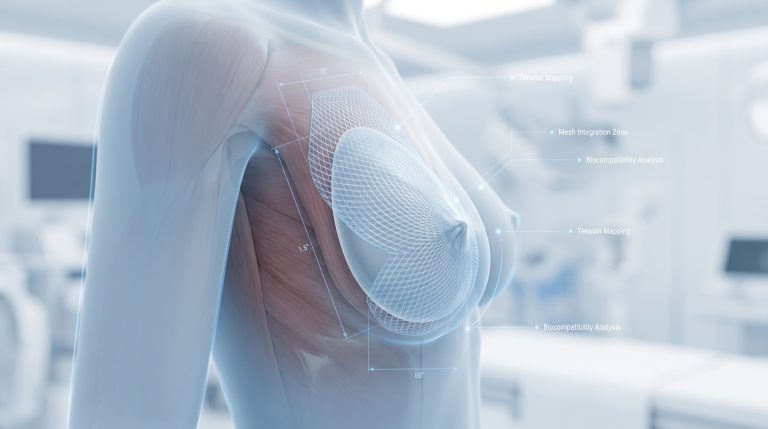
Rigottomia is a minimally invasive step done through tiny skin punctures rather than open incisions. The surgeon passes a fine needle or small blade under the skin and makes many small releases in the tight or scarred tissue, softening it into a three-dimensional mesh. Fat — harvested from elsewhere on your body — is then grafted into that released tissue. Because the whole point is to prepare the tissue to accept the graft, rigottomia and fat grafting are usually performed together in the same procedure.
Is rigottomia safe?
Rigottomia is a well-established technique used by reconstructive and aesthetic surgeons, and because it is performed through small punctures it avoids the long incisions and larger scars of open surgery. As with any procedure, it is not risk-free: possible issues include bruising, swelling, temporary firmness or lumpiness, and — as with all fat grafting — partial reabsorption of the grafted fat, which is why more than one session is sometimes needed. Serious complications are uncommon in appropriately selected patients, but no procedure carries zero risk. Safety depends on the individual, the tissue being treated and the surgeon’s experience, so suitability is always a clinical judgement.
Will it leave scars?
One of the main attractions of rigottomia is that it works through needle-sized entry points. These typically heal to marks that are very small and fade over time, in contrast to the longer scars associated with flap surgery or some implant techniques. The releases themselves are made inside the tissue, not on the surface.
What is anaesthetic and recovery like?
Depending on the area and how much work is planned, rigottomia with fat grafting is often carried out under local anaesthesia with sedation, sometimes as a day procedure, though this varies with the case. Because it is minimally invasive, the recovery period is generally shorter than open surgery. Patients commonly experience:
- Bruising and swelling at both the release site and the area where fat was taken, settling over one to a few weeks.
- Tenderness or firmness in the treated area, which softens as healing progresses.
- Guidance to avoid pressure on the grafted area for a period, to protect the delicate new graft while it establishes a blood supply.
Your surgeon will give you specific aftercare instructions, which matter a great deal to how well the graft takes.
Because grafted fat needs time to establish a blood supply, protecting the treated area in the early weeks is one of the most important things you can do for the result.
How long until I see results, and will they last?
Results build gradually. Early swelling can mask the outcome, and some of the grafted fat is naturally reabsorbed in the first months as the graft settles — the fat that survives and establishes a blood supply is generally considered long-lasting. Because a released bed can only support so much fat at once, surgeons often plan more than one session to reach the final result, particularly in scarred or previously irradiated tissue. This staged approach is normal and is a feature of the technique, not a sign that anything has gone wrong.
Who is rigottomia suitable for?
It is most useful where tissue is tight, scarred or constricted — for example tuberous breasts, scars and areola herniation, or thin, tethered tissue after mastectomy. Whether it is right for you depends on your anatomy, your goals, the quality of the tissue and your overall health. A qualified surgeon will assess these and explain the likely number of sessions and realistic expectations.
The bottom line
Rigottomia is a minimally invasive, needle-based way to release tight or scarred tissue so that fat grafting can succeed, with small entry points instead of long scars and a generally quicker recovery than open surgery. It is well established and, in the right hands and the right patient, has a good safety profile — while carrying the normal caveats of any procedure. To understand the technique in full, read our guide to what rigottomia is and how fat grafting works.
This article is for general education and is not medical advice. Any decision about a procedure should be made with a qualified surgeon who can assess your individual situation.
Important information This article is general education, not medical advice. Tap to read the full medical, regulatory & legal notice.
This article is provided by Advanced Biomedical Concept for general informational and educational purposes only. It does not constitute medical, surgical, diagnostic, or other professional healthcare advice, and it is not a substitute for consultation with a suitably qualified healthcare professional. Reading it creates no doctor–patient or other professional relationship. Nothing here should be used to diagnose, treat, cure, or prevent any disease or condition, or to make decisions about medical care. Always seek the advice of a physician or other qualified provider with any questions about a medical condition or treatment, and never disregard or delay professional advice because of something you have read here.
Any reference to Advanced Biomedical Concept products (including ExaShape and ExaFat) is provided for general information only. These are medical devices intended to be used by appropriately trained healthcare professionals strictly in accordance with their applicable, current Instructions for Use (IFU). Regulatory status (including CE marking and classification under the EU Medical Device Regulation), market availability, and approved indications differ between countries and may change over time; a device referred to here may not be available or approved in your country. This content is not intended as, and must not be relied upon as, a statement or claim of safety, clinical performance, or efficacy beyond what is set out in the applicable IFU and current regulatory approvals. Product-specific information is directed at healthcare professionals and is not intended to promote, advertise, or offer any medical device to the general public where such promotion is restricted or prohibited by law.
Statements reflect information believed to be accurate at the date of publication and may be updated or corrected without notice. Any statements regarding the future are expectations or general views, not guarantees. Clinical outcomes depend on many individual factors, results vary from person to person, and no particular result is promised or implied. Where third-party studies, sources, or external links are referenced, they are provided for convenience and information only and do not imply endorsement, and Advanced Biomedical Concept is not responsible for their content.
To the fullest extent permitted by applicable law, Advanced Biomedical Concept and its officers, employees, contributors, and representatives (each acting in that capacity and on behalf of Advanced Biomedical Concept) accept no liability for any loss, injury, or damage of any kind arising directly or indirectly from use of, or reliance on, this content. Nothing in this notice excludes or limits any liability that cannot lawfully be excluded or limited.
Questions about this material can be directed to us via our contact page.
Last reviewed: July 28, 2026.