Soft-tissue matrices transformed implant-based reconstruction, but no implanted material is free of complications, and honest counselling depends on knowing what they are. This article reviews the complications reported with acellular dermal matrix (ADM) and related biological scaffolds: seroma, infection, and the curious inflammatory picture known as red breast syndrome. The aim is educational, for healthcare professionals and informed patients; the figures quoted are attributed to their published sources, and none of this replaces device instructions for use or individual clinical judgement.


The overall picture
Large reviews of ADM-assisted reconstruction (Smith et al., Gland Surgery 2023, among others) describe a consistent set of matrix-associated events: seroma, surgical-site infection, mastectomy flap necrosis, and explantation when these cascade. Reported rates vary widely between cohorts because patient selection, drain protocols, radiotherapy exposure and even how a seroma is defined differ from unit to unit. That variability is itself the first lesson: matrix complications are heavily technique- and protocol-dependent.
Seroma
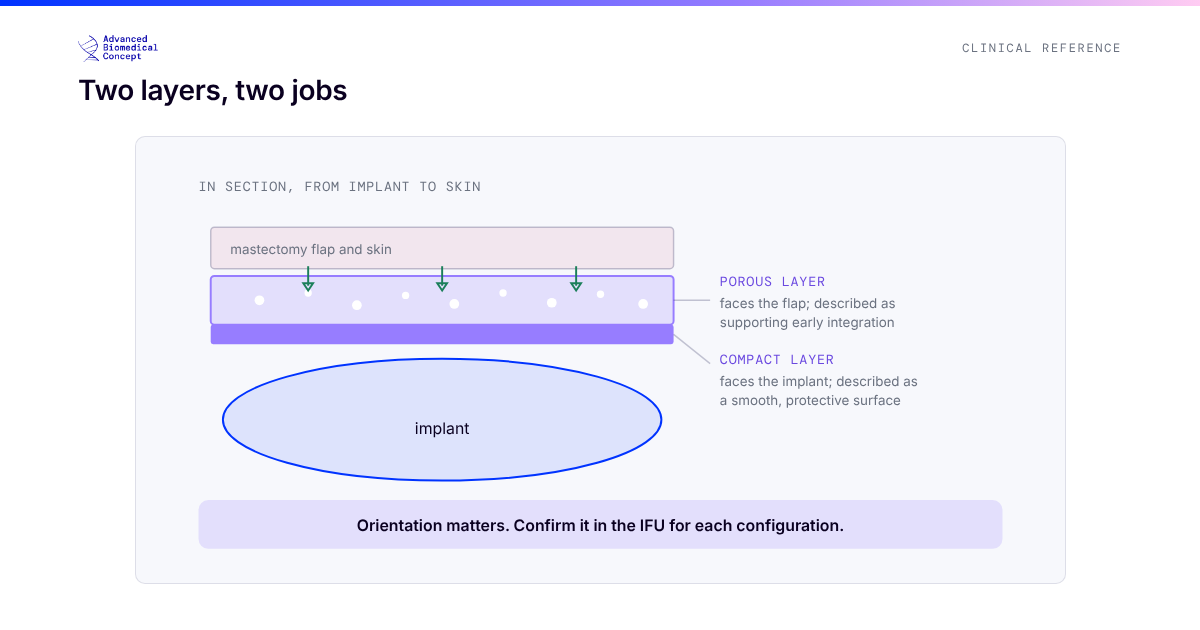
Fluid accumulation is the most frequently reported matrix-associated event. Any implanted sheet creates a potential space and an interface that must revascularise; until it does, fluid can collect. Published mitigations include reliable drainage protocols, complete matrix-to-flap apposition without dead space, and attention to matrix preparation. Persistent seroma matters beyond inconvenience, because it is associated with downstream infection and explantation in several series.
Infection
Infection rates in ADM cohorts again vary widely across the published literature. Contributing mechanisms discussed in the literature include the avascular interval before integration, seroma as a culture medium, and baseline patient factors; sterile processing of the matrix also entered the discussion after early series using aseptically processed dermis. Prevention bundles mirror general implant surgery: antibiotic protocols, contamination control, drain discipline and early management of fluid collections.
Red breast syndrome
Red breast syndrome (RBS) is a self-limiting erythema overlying an implanted dermal matrix, appearing days to weeks after surgery without fever, raised inflammatory markers or the systemic signs of infection. Its importance is chiefly that it mimics cellulitis and can trigger unnecessary antibiotics or even explantation. Its cause remains debated: hypersensitivity-type responses and endotoxin-mediated sterile inflammation have both been proposed (Nahabedian and colleagues; the endotoxin hypothesis discussed in Aesthetic Surgery Journal commentary in 2019), and a 2023 review in Plastic and Reconstructive Surgery Global Open summarises the state of knowledge. Practical points that recur:
- It is a diagnosis of exclusion. True infection must be ruled out clinically; RBS patients are systemically well.
- It is described essentially with dermal matrices. Reports concentrate in human and porcine dermis cohorts; the literature on non-dermal scaffolds such as bovine pericardium has not established an equivalent syndrome, which may reflect material differences, lower usage volumes, or both. No causal comparison should be inferred.
- It usually resolves without intervention, over weeks, with expectant management once infection is excluded.
Interpreting matrix complication data
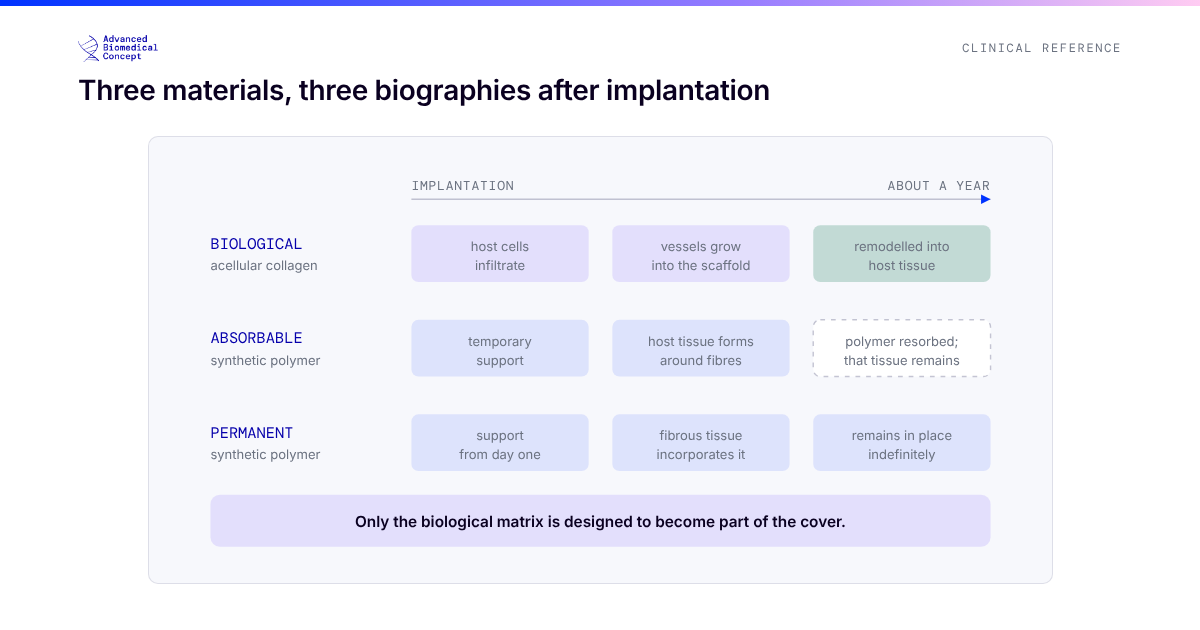
Three habits make this literature far more useful. First, insist on definitions: a “seroma” that resolves with one aspiration and one that leads to explantation are different events. Second, note the denominator and follow-up: short follow-up flatters every technique. Third, remember that material families differ in tissue of origin, processing and structure, so class-level statements about “matrices” blur real distinctions; our biological matrix versus ADM guide and brand-level comparison unpack these differences with sources, and our evidence at a glance page sets the published figures side by side in context.
The bottom line
Matrix-assisted reconstruction carries a real but manageable complication profile dominated by seroma and infection, plus the benign but alarming mimic that is red breast syndrome. Knowing the patterns, defining events precisely and reading cohort data with their context intact is what turns complication statistics into better counselling and better protocols.
Key published sources
- Smith JM, et al. Complications associated with acellular dermal matrix use in implant-based breast reconstruction. Gland Surgery. 2023.
- Red breast syndrome and acellular dermal matrix. Plastic and Reconstructive Surgery Global Open. 2023.
- Commentary: the role of endotoxin in sterile inflammation after implanted acellular dermal matrix, red breast syndrome explained? Aesthetic Surgery Journal. 2019.
- Weichman KE, et al. Sterile ready-to-use ADM, infection and red breast syndrome in reconstruction. Plastic and Reconstructive Surgery. 2015.
Important information This article is general education, not medical advice. Tap to read the full medical, regulatory & legal notice.
This article is provided by Advanced Biomedical Concept for general informational and educational purposes only. It does not constitute medical, surgical, diagnostic, or other professional healthcare advice, and it is not a substitute for consultation with a suitably qualified healthcare professional. Reading it creates no doctor–patient or other professional relationship. Nothing here should be used to diagnose, treat, cure, or prevent any disease or condition, or to make decisions about medical care. Always seek the advice of a physician or other qualified provider with any questions about a medical condition or treatment, and never disregard or delay professional advice because of something you have read here.
Any reference to Advanced Biomedical Concept products (including ExaShape and ExaFat) is provided for general information only. These are medical devices intended to be used by appropriately trained healthcare professionals strictly in accordance with their applicable, current Instructions for Use (IFU). Regulatory status (including CE marking and classification under the EU Medical Device Regulation), market availability, and approved indications differ between countries and may change over time; a device referred to here may not be available or approved in your country. This content is not intended as, and must not be relied upon as, a statement or claim of safety, clinical performance, or efficacy beyond what is set out in the applicable IFU and current regulatory approvals. Product-specific information is directed at healthcare professionals and is not intended to promote, advertise, or offer any medical device to the general public where such promotion is restricted or prohibited by law.
Statements reflect information believed to be accurate at the date of publication and may be updated or corrected without notice. Any statements regarding the future are expectations or general views, not guarantees. Clinical outcomes depend on many individual factors, results vary from person to person, and no particular result is promised or implied. Where third-party studies, sources, or external links are referenced, they are provided for convenience and information only and do not imply endorsement, and Advanced Biomedical Concept is not responsible for their content.
To the fullest extent permitted by applicable law, Advanced Biomedical Concept and its officers, employees, contributors, and representatives (each acting in that capacity and on behalf of Advanced Biomedical Concept) accept no liability for any loss, injury, or damage of any kind arising directly or indirectly from use of, or reliance on, this content. Nothing in this notice excludes or limits any liability that cannot lawfully be excluded or limited.
Questions about this material can be directed to us via our contact page.
Last reviewed: August 24, 2026.