The Clinical Objective
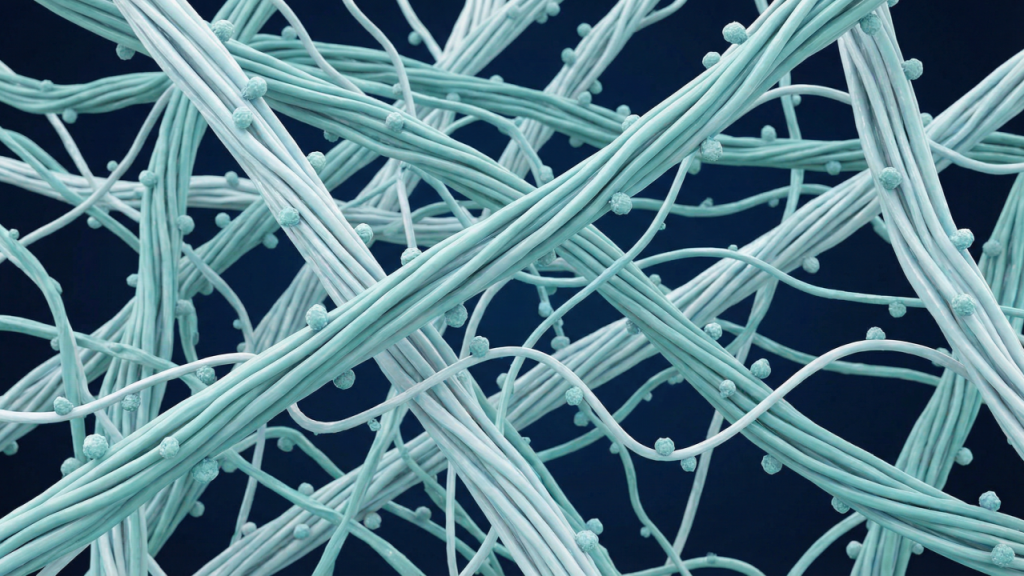
Most medical implants remain “foreign bodies.” Acellular Bovine Pericardium Matrices (ABPM) represent a shift: under the right conditions, they do not just integrate: the scaffold is progressively replaced by the host’s endogenous tissue.
What is an ECM?
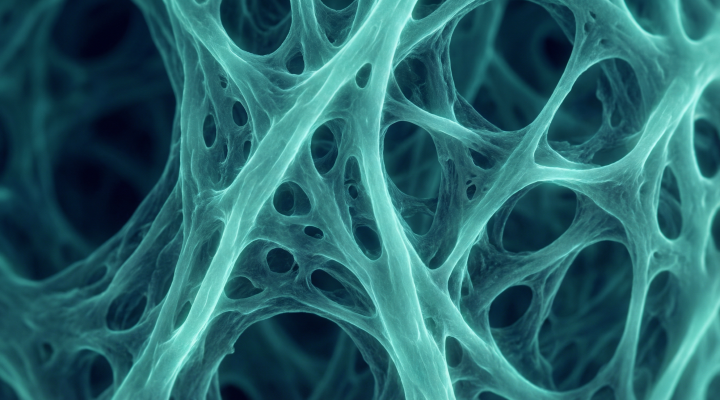
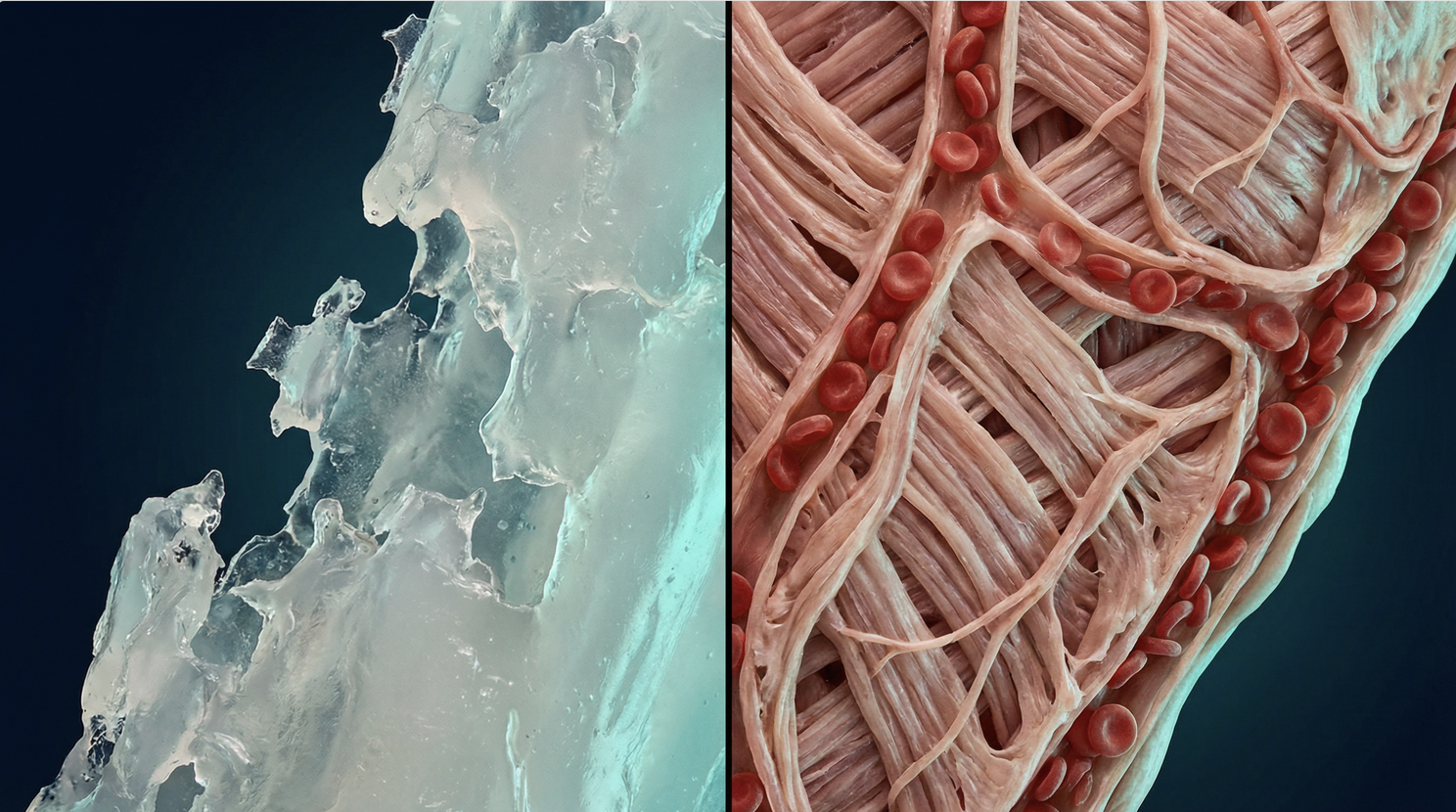
An Extracellular Matrix (ECM) is a non-crosslinked 3D collagen scaffold. Through specialized decellularization, cellular components are removed to minimize immunogenic response, preserving the natural architecture to support host tissue ingrowth.
The Source Matters
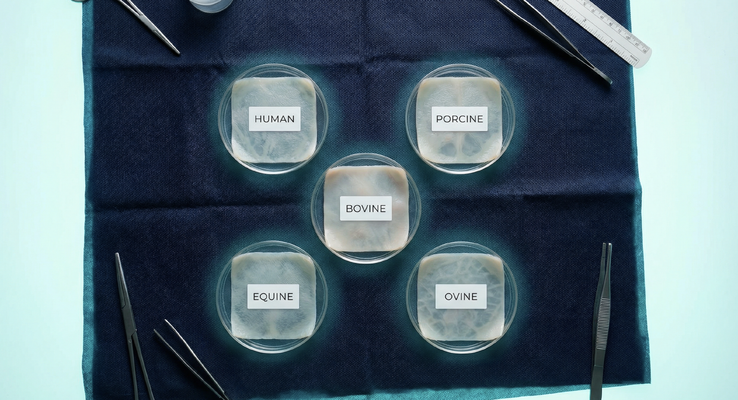
Not all biological matrices are the same. Whether derived from Human, Equine, Bovine, Porcine, or Ovine tissue, the specific origin dictates the inflammatory profile, integration rate, and remodeling quality.
The Distinction: ADM vs. ABPM
While many matrices are skin-derived (Acellular Dermal Matrix – ADM), ExaShape is derived from bovine pericardium (ABPM). Unlike dense dermal tissue, pericardium is naturally thin (0.5 mm), bilayer, and highly permeable, allowing for superior fluid exchange and faster revascularization.
Stage 1: Early Inflammation
Upon implantation, the early host response is dominated by M2 macrophages, triggering a pro-remodeling pathway rather than rejection. Multicentric data (n=65) demonstrates a high safety profile with zero significant capsular contracture (De Vita et al., 2024).

Stage 2: Active Neovascularization
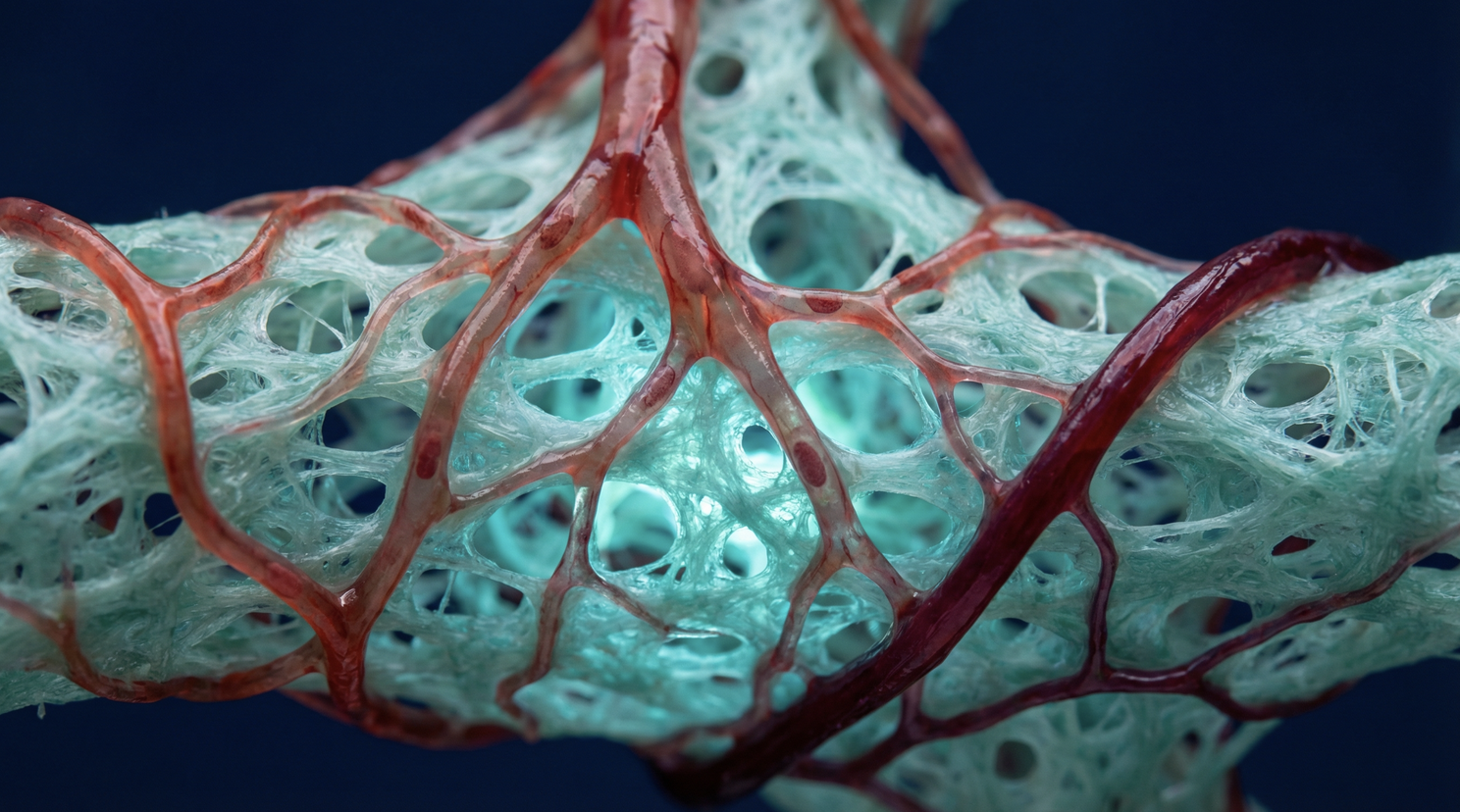
The microporous structure of bovine pericardium facilitates rapid blood vessel formation within the matrix itself. In vivo ultrasound monitoring confirms progressive neovascularization over a 12-month period (Varvaras et al., 2023).

Stage 3: Cellular Colonization
The matrix acts as a functional bio-platform. Host fibroblasts migrate into the 3D network, initiating the synthesis of endogenous, native collagen.
Stage 4: Functional Remodeling
As a non-crosslinked material, the scaffold undergoes controlled enzymatic degradation. It is gradually replaced by vascularized, elastic host tissue, maintaining structural pocket stability throughout the transition.
The ExaShape Advantage
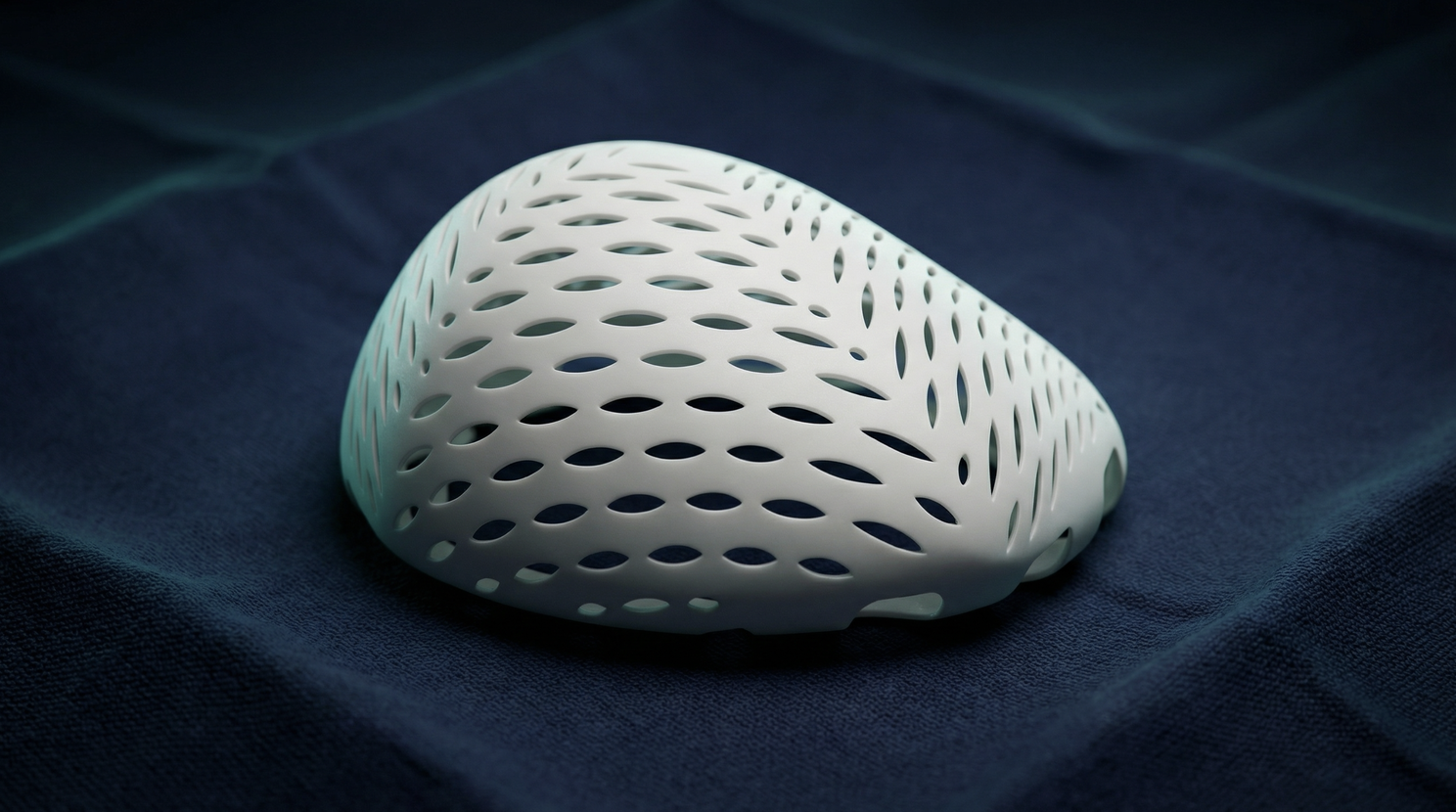
By utilizing a naturally thin, gamma-sterilized bovine pericardium, ExaShape balances viscoelastic properties with superficial host tissues. It provides high suture retention while facilitating predictable, synchronized biological integration.
Data from the largest multicentric study to date evaluating ABPM in prepectoral reconstruction demonstrates a favorable safety profile, supporting its use as a reliable and suitable biological option for selected patients.
Ready to evaluate the biological approach to prepectoral reconstruction? From M2 macrophage polarization to ultrasound-confirmed neovascularization, ExaShape ABPM is engineered for surgeons prioritizing predictable remodeling and long-term pocket stability.
Regulatory Disclaimer ExaShape is a CE-marked medical device (Acellular Bovine Pericardium Matrix) intended strictly for use by qualified healthcare professionals. The clinical observations referenced are based on specific peer-reviewed literature (De Vita et al., 2024; Varvaras et al., 2023). Individual patient outcomes may vary depending on patient anatomy, biological risk factors, comorbidities, and surgical technique. Prior to application, always refer to the official Instructions for Use (IFU) for complete indications, contraindications, warnings, and potential adverse events.
Important information This article is general education, not medical advice. Tap to read the full medical, regulatory & legal notice.
This article is provided by Advanced Biomedical Concept for general informational and educational purposes only. It does not constitute medical, surgical, diagnostic, or other professional healthcare advice, and it is not a substitute for consultation with a suitably qualified healthcare professional. Reading it creates no doctor–patient or other professional relationship. Nothing here should be used to diagnose, treat, cure, or prevent any disease or condition, or to make decisions about medical care. Always seek the advice of a physician or other qualified provider with any questions about a medical condition or treatment, and never disregard or delay professional advice because of something you have read here.
Any reference to Advanced Biomedical Concept products (including ExaShape and ExaFat) is provided for general information only. These are medical devices intended to be used by appropriately trained healthcare professionals strictly in accordance with their applicable, current Instructions for Use (IFU). Regulatory status (including CE marking and classification under the EU Medical Device Regulation), market availability, and approved indications differ between countries and may change over time; a device referred to here may not be available or approved in your country. This content is not intended as, and must not be relied upon as, a statement or claim of safety, clinical performance, or efficacy beyond what is set out in the applicable IFU and current regulatory approvals. Product-specific information is directed at healthcare professionals and is not intended to promote, advertise, or offer any medical device to the general public where such promotion is restricted or prohibited by law.
Statements reflect information believed to be accurate at the date of publication and may be updated or corrected without notice. Any statements regarding the future are expectations or general views, not guarantees. Clinical outcomes depend on many individual factors, results vary from person to person, and no particular result is promised or implied. Where third-party studies, sources, or external links are referenced, they are provided for convenience and information only and do not imply endorsement, and Advanced Biomedical Concept is not responsible for their content.
To the fullest extent permitted by applicable law, Advanced Biomedical Concept and its officers, employees, contributors, and representatives (each acting in that capacity and on behalf of Advanced Biomedical Concept) accept no liability for any loss, injury, or damage of any kind arising directly or indirectly from use of, or reliance on, this content. Nothing in this notice excludes or limits any liability that cannot lawfully be excluded or limited.
Questions about this material can be directed to us via our contact page.
Last reviewed: June 16, 2026.