A Pericardium Bovine Matrix Pocket in DTI Prepectoral Breast Reconstruction
Breast reconstructive surgery has evolved significantly over the years. One of the recent advancements is the use of prepectoral implants in combination with synthetic and biological material as a natural and effective coverage. To date, there is little published data on breast reconstruction using acellular bovine pericardium matrix and most concern submuscular breast reconstruction. This study aimed to describe the multicentric-multisurgeon experience in performing direct to implant (DTI) prepectoral breast reconstructions using acellular bovine pericardium matrix (ABPM) pocket. A retrospective multicentric data collection of the all the immediate prepectoral breast reconstructions using acellular bovine pericardium was carried out by the authors. Surgical data including type of mastectomy, axillary surgery, type and size of implant, size of ABPM, duration of surgery were collected for each patient. Postoperative data including adjuvant treatments, complications, necessity to perform other interventions, patient's satisfaction were collected. Cosmetic results were also evaluated by 7 different observers at minimum 1 year follow-up. A total of 65 breast reconstruction were included in the study. Mean follow up was 21.3 months. Average surgical time was 1,42 hours. Minor complications occurred in 4 breasts; major complications occurred in 2 breasts. After 6 months follow-up, 7 patients underwent fat grafting to correct any rippling and /or wrinkling. Breast aesthetic and patients reported outcomes were satisfactory. Not significant capsular contracture was noted at the follow up control. To date, this is the largest study about prepectoral breast reconstruction with ABPM. On the basis of our results, prepectoral breast reconstruction ABPM assisted is a reliable, safe and suitable option providing good patient satisfaction outcomes.
The use of Exashape (TM) Bioshield Pocket in prepectoral breast reconstruction: a preliminary experience
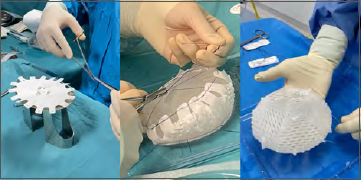
Objective. In the few latter, immediate breast reconstruction, performed with prepectoral positioning of implants, is assuming an increasinglly important role in the tumor recovery process for most women. With this study we want to describe our experience in prepectoral immediate breast reconstruction using Exashape, a new pre-shaped bilayer acellular dermal matrix derived from bovine pericardium. Methods. Twenty-one patients with breast cancer were enrolled and went under momo-(5) or bilateral (16) nipple sparing mastectomy, for a total of 37 reconstructed breasts. All the implants have been assembled with Exashape and positioned over the pectoralis major muscle. All the patient answered to BREAST-Q questionnaire in preoperative time six months after surgery. Results. This preliminary study showed a reduction of implant’s exposure time and risk of bacterial contamination, a decreased risk of injury to the implant and an easy assembly and positioning. Of Twenty- one patients enrolled for this study, only five patients had complication: four resolved after surgical revision of scars and one with implant loss. BREAST-Q resulted overall satisfaction with breasts, psychosocial well-being, and sexual well-being were all significantly increased (p < 0.05) and chest discomfort got significantly worse (p < 0.05). Conclusions. Although further studies would be useful to validate our result. We can say that ExashapeTM has proved to be useful in breast reconstruction, allowing a good aesthetic and functional result.